

Residential | Paragraph 84
Hurleston, Cheshire
How we helped:
- Part O overheating assessment
- Whole life carbon modelling and reporting
- Energy and building services feasibility study
- Integrated design workshops to support Paragraph 84e planning strategy.
A bespoke Paragraph 84e rural home shaped by its landscape
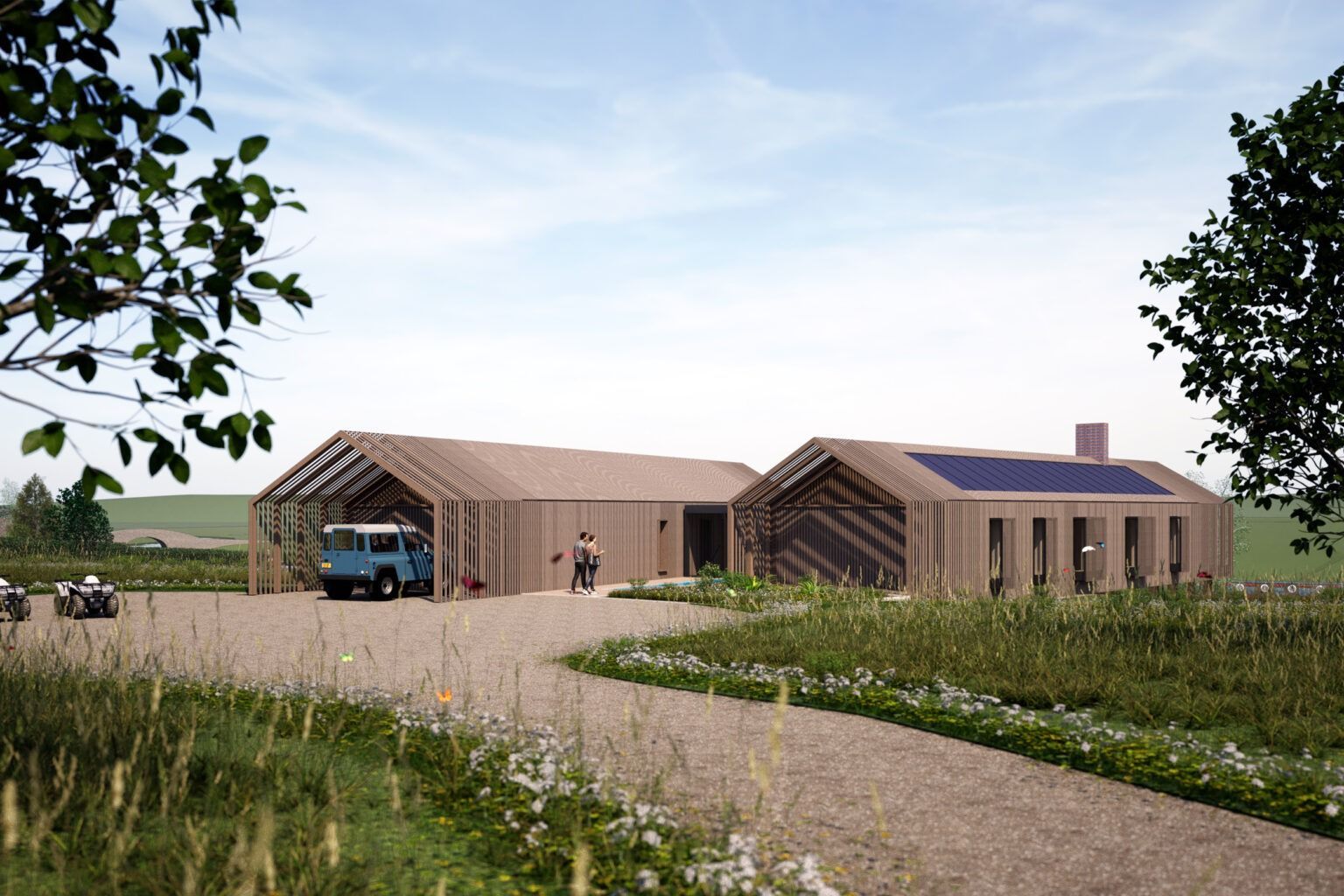
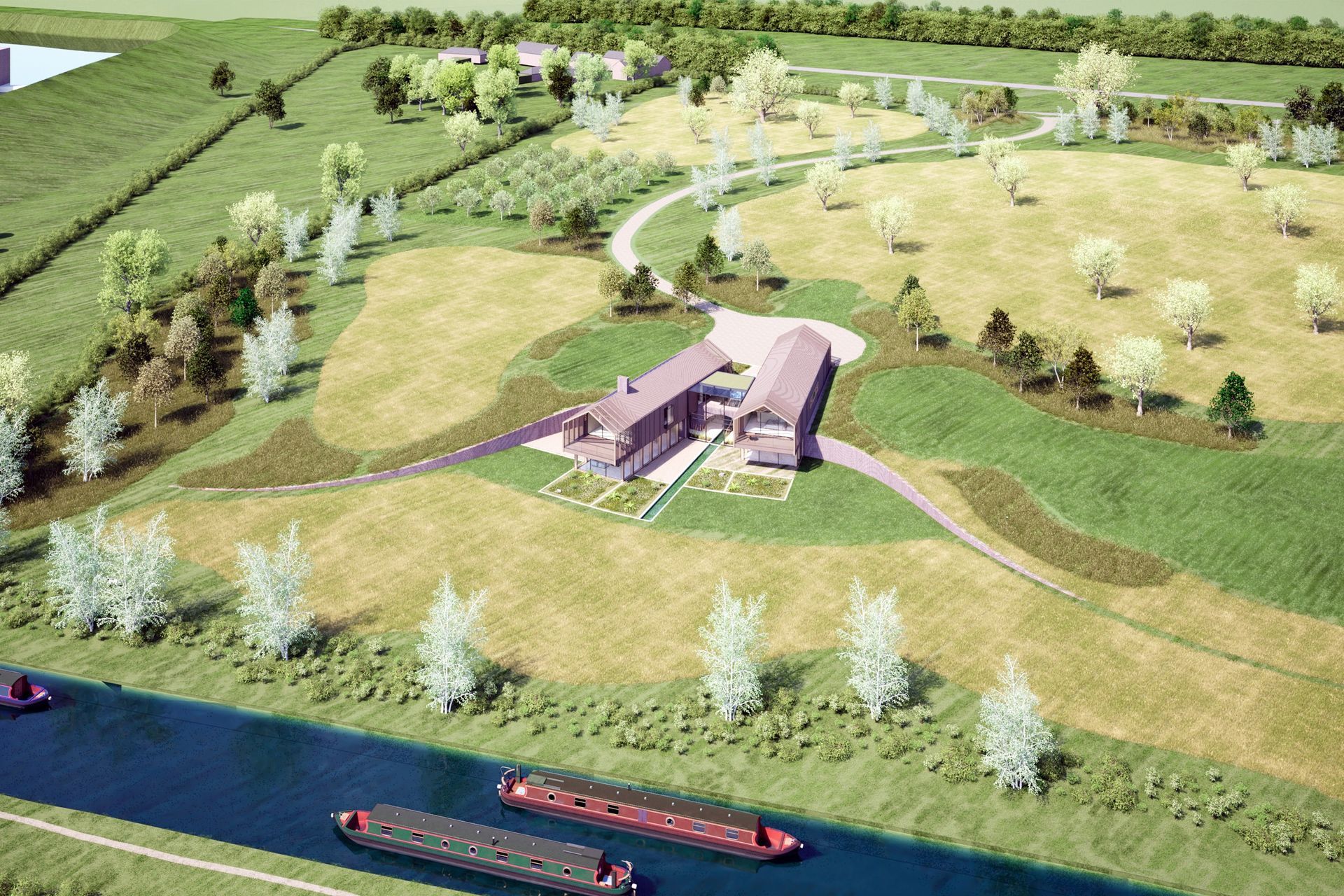
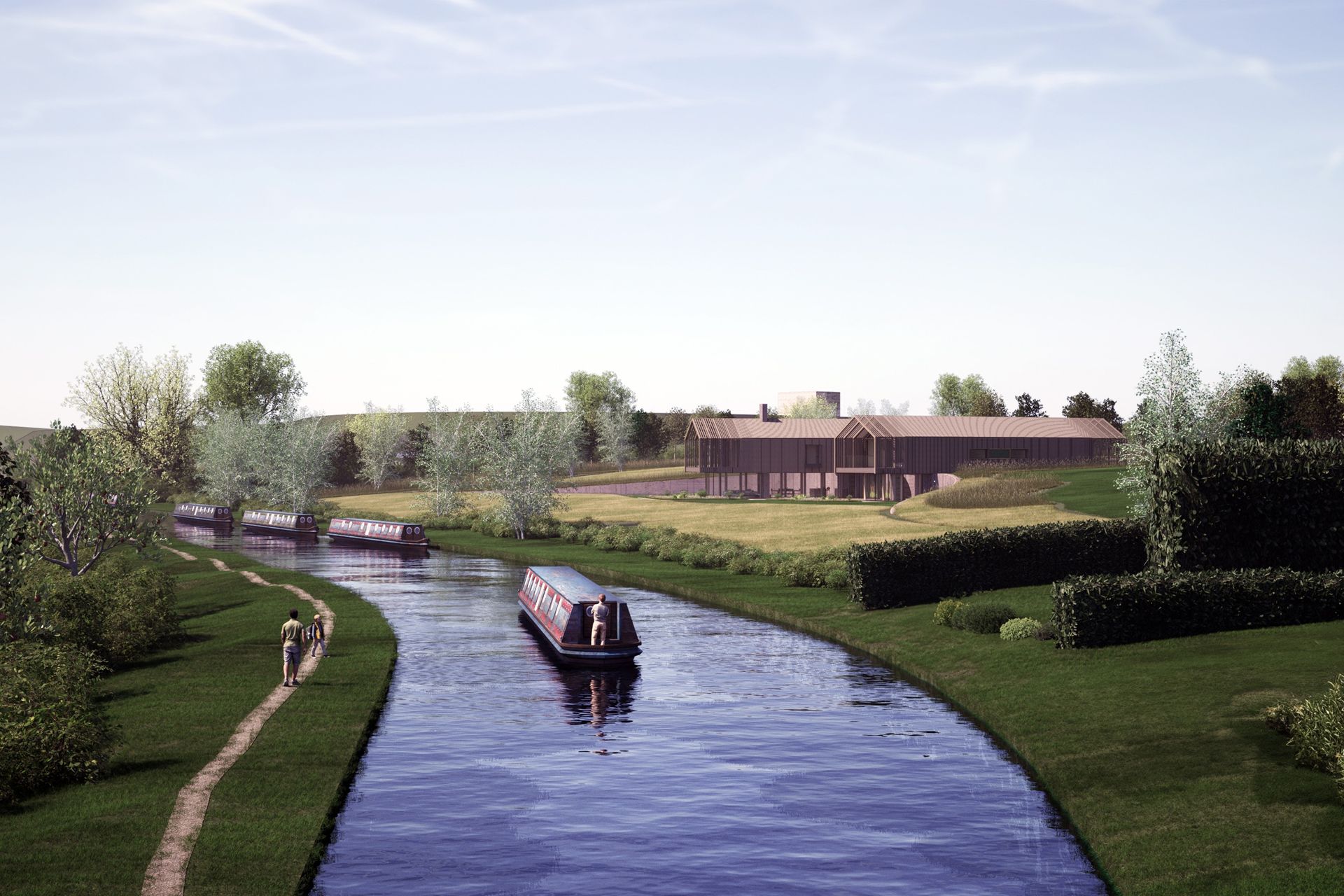
A new, bespoke rural home has been proposed on farmland in the Cheshire countryside, on the banks of the Shropshire Union Canal and close to a reservoir in conservation area. Designed by Anderson + Prescott Architects for a private client, the project was developed to meet the stringent requirements of Paragraph 84e of the National Planning Policy Framework, which demands exceptional architectural quality, a demonstrable response to landscape, and a robust, evidence-based sustainability strategy.
The defining characteristic of the site is water. The canal network provided both a powerful visual context and source of inspiration for the architectural design.
The Importance of Collaboration
This scheme was Mesh’s second Paragraph 84 project with Anderson + Prescott and builds on a long-term working relationship with planning consultants Hughes Planning.
It applied a collaborative approach to developing iterative, performance-led design and practical technical solutions.
Mesh had to ensure that the building performance data could be interpreted collectively and translated into the architectural response. Taking a solutions-focused approach was fundamental in developing a coherent design narrative that addressed the multiple strands of Paragraph 84(e) including landscape sensitivity, architectural excellence, low energy performance, and developing a future-proof building for multi-generational living.
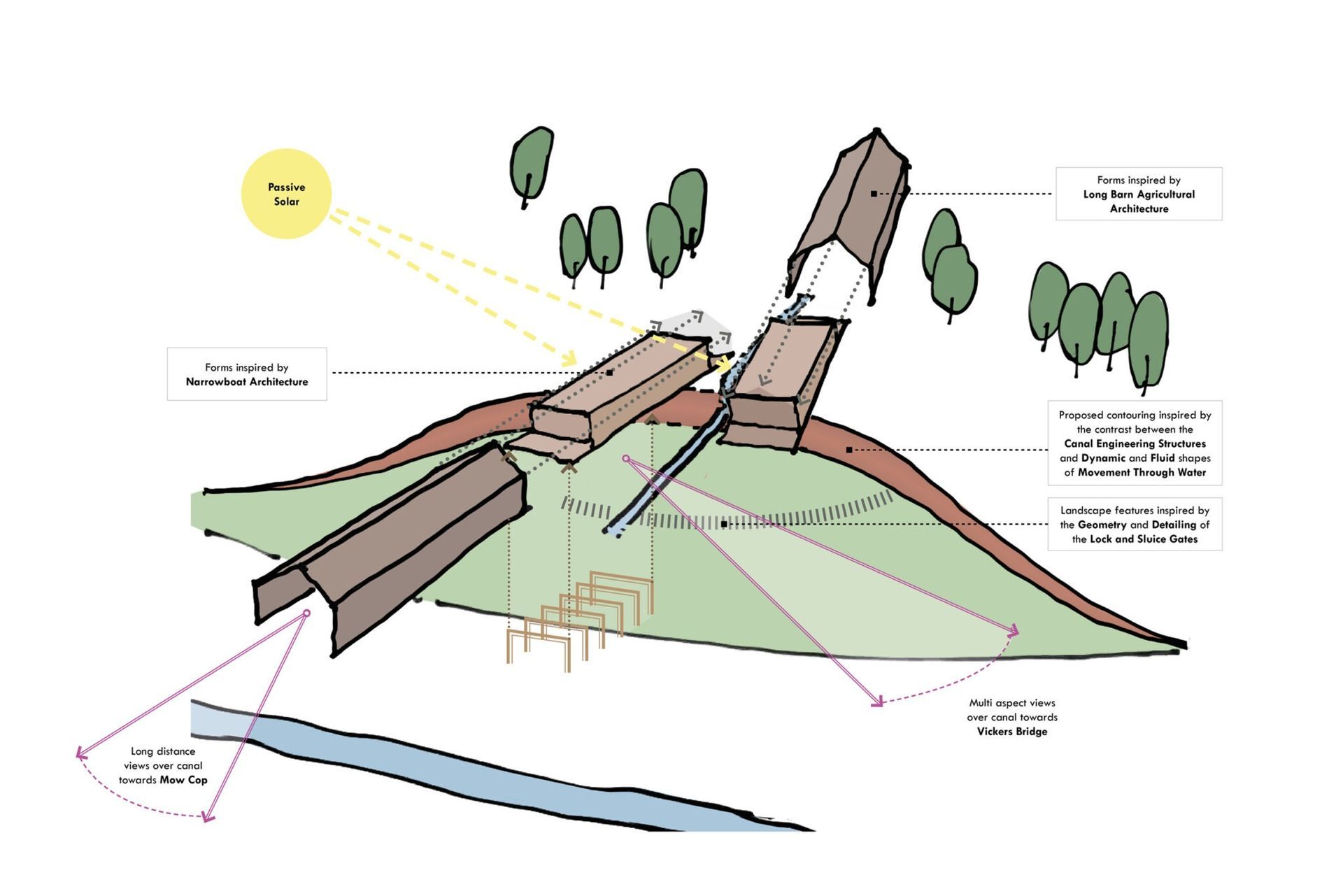
Design Concept and Response to the Site
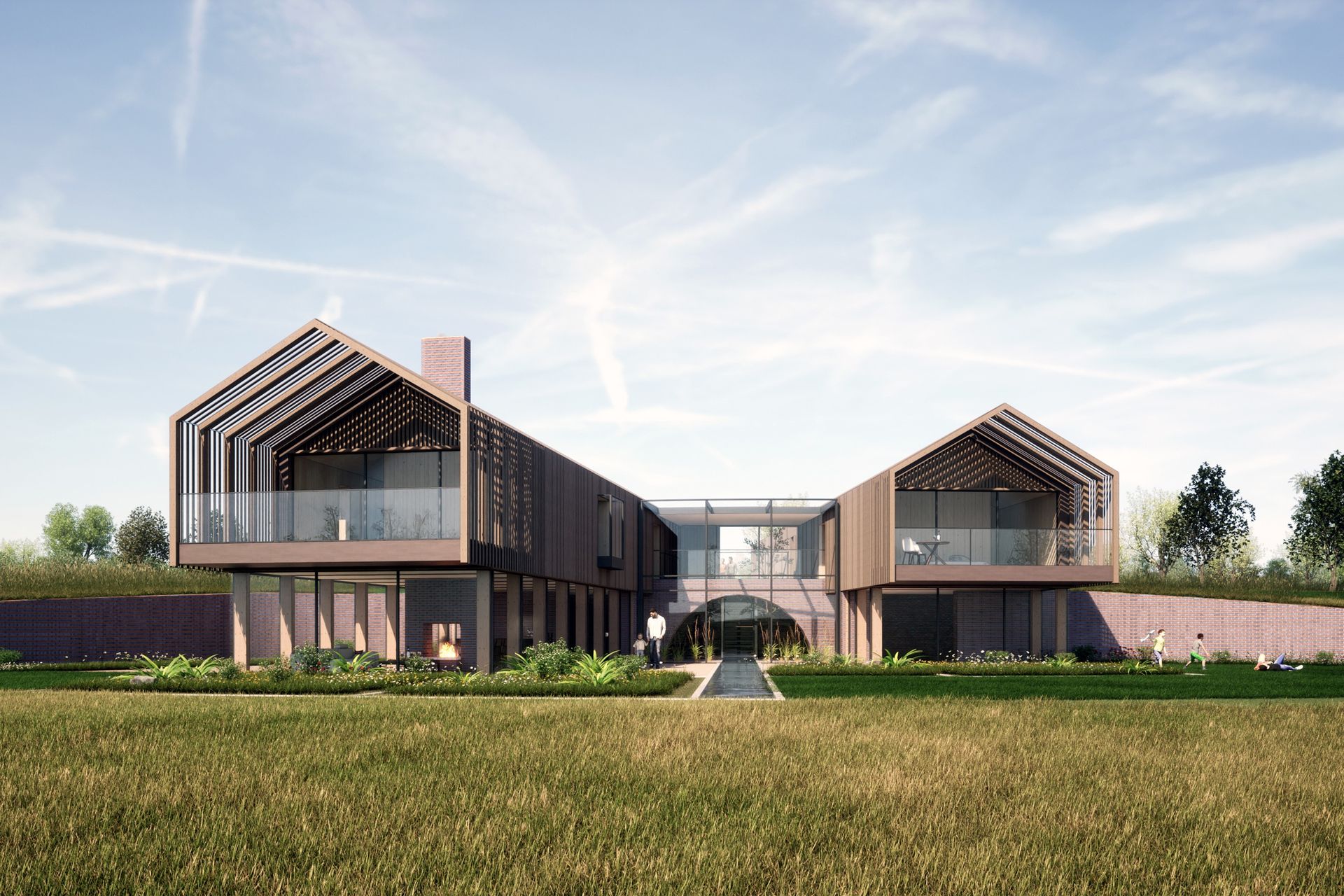
The design responds to the topography of the site and allows the building to sit discretely within the landscape whilst opening extensive views towards the canal.
Two parallel wings form the primary architectural composition and are a contemporary interpretation of the long agricultural barns that are typical of the area, whilst also referencing the linear proportions of narrowboats.
Subtle design cues include the orientation of the building, the landscaping, the use of water appearing to run through the building, and a bridge to link the two distinct volumes. These features combine to reference the waterside location, canal bridges, and lock gate engineering in the architecture.
Performance, Sustainability and Technical Strategy
Alongside its architectural aspirations, the Hurleston project was required to demonstrate a robust and credible response to climate, comfort and long-term operational performance – critical considerations for Paragraph 84(e) proposals.
Mesh was appointed to provide:
- Part O overheating assessment, supporting a fabric-first, passive approach to thermal comfort.
- Whole life carbon modelling and reporting – using OneClick LCA allowed detailed analysis of embodied and operational carbon across the project life cycle to inform material choices and reduce embodied carbon.
- A feasibility study to develop the energy and building services strategy, aligned with the client’s ambition for long-term energy efficiency and low running costs
- Attendance at Paragraph 84 design workshops, ensuring close co-ordination between architecture, landscape, services and planning strategy.
The measures incorporated include:
- The home is super-insulated.
- Building orientation minimises solar gain while maintaining canalside views.
- The use of glazing is balanced with solid elements to mitigate the risk of overheating.
- Renewable technologies specified are solar photovoltaics and ground source heat pump, integrated as part of a coherent energy strategy rather than applied as bolt-on solutions.
- As the house is required for multi-generational living, a self-contained suite with heating that can be isolated if required.
Mesh’s modelling and analysis supported refinements to orientation, glazing proportions, insulation strategy and services selection, helping the design team demonstrate that architectural quality and environmental performance were developed holistically.
The design strategy prioritises a fabric-first approach to align with RIBA 2030 targets for energy efficiency and carbon reduction.
Images – Anderson + Prescott
The Architect’s Perspective
David Anderson, Director, Anderson + Prescott:
“This project went very well, and we are keen to continue to work with the Mesh team. Their collaborative approach was very valuable on this proposal, helping us to interpret the data and how the design could respond to that.
Their engineers helped us to visualise the building in response to the climate – orientation, levels of glazing, solid elements, insulation and embodied energy all become part of an iterative design conversation. It is not about maximising renewable technology for its own sake, but achieving a balanced outcome for exceptional architecture, the energy strategy and the client’s specific requirements for a low energy home that responds well to its agricultural setting.
Mesh’s collaborative ethos was critical in developing a robust proposal capable of meeting the Paragraph 84e planning requirements.”