by Doug Johnson
•
28 October 2026
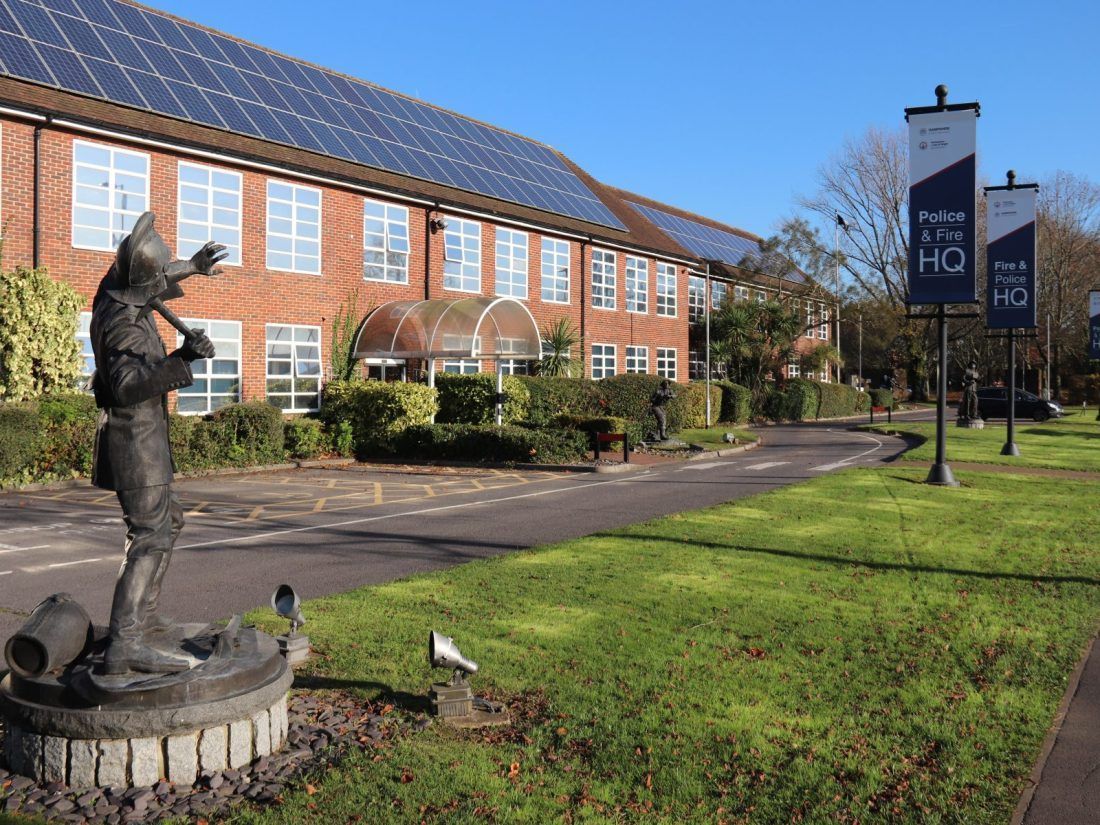
Decarbonising a large building estate is rarely as simple as replacing one technology with another. Doug Johnson, Founding Director of energy and building performance specialists Mesh, looks at the importance of data-led decision-making. For Estates Directors responsible for large property portfolios, the pressure to decarbonise is coming from multiple directions. Organisations need to reduce operational carbon, transition away from fossil fuels, improve energy efficiency, control escalating running costs and maintain occupier comfort, particularly when climate change is leading to more buildings overheating in summer. At the same time, buildings still need to perform their primary function, capital budgets are constrained and major interventions have to be costed and planned. Against that background, it can be tempting to start with the technology – such as heat pumps, solar PV, insulation and new heating systems. However, whilst all of these technologies may form part of the solution, they are rarely the right starting point. Why Assessing Building Performance Matters For a large and diverse estate, the first question should be much simpler – how are our buildings actually performing? This distinction matters because two apparently similar buildings can have very different energy performance profiles depending on age, fabric, heating and hot water systems, controls, condition and patterns of occupation. Understanding these variables will make the difference between a credible long-term decarbonisation strategy, and a costly and disruptive programme of interventions that could fail to deliver the optimum results. Estates directors and strategic property leads are under growing pressure to reduce operational costs, cut carbon emissions and prepare building estates for the transition away from fossil fuels. Yet most estates were never designed as a single asset. They are often a portfolio of buildings from different decades, built to different standards, used in different ways and, in many cases, still running on fossil fuels. Decarbonisation such an estate should not be viewed as a single project. It needs a strategic, evidence-led programme, rather than an individual renewable technology specification. Understanding Actual Buildings Not Assumptions Mesh recently completed a detailed building performance assessment and energy strategy for Hampshire & Isle of Wight Fire & Rescue Service, examining its headquarters in Eastleigh and six fire stations selected to represent the age, scale and typology found across its wider 62-building estate. Occupancy patterns varied enormously, from office-based staff working regular hours in fire stations to facilities that stand largely empty until a crew returns from a call-out and needs the building to become comfortable within minutes. Building fabric, heating controls and hot water demand all varied widely. This is true of most large estates, whether in emergency services, local authorities, education, healthcare or the commercial sector. Treating a diverse portfolio as if it were one building type, or applying a single technology across the board, consistently produces less value and, in some cases, worse outcomes for occupants. Building the Evidence Base The starting point for any credible decarbonisation strategy should be data. For the Hampshire & Isle of Wight project, that meant analysing three years of energy billing data for each of the seven buildings assessed to understand how consumption varied through the year and how each heating system responded to changes in external temperature. This produced a benchmark energy use intensity figure for each building typology, allowing direct comparison against national emergency services benchmarks and establishing a clear baseline against which future improvements can be measured. Alongside this, detailed building fabric assessments quantified heat loss through U-value calculations for roofs and walls, and tested the impact of a range of insulation interventions and materials against both capital cost and payback period. Occupancy patterns, heating and hot water systems, and controls were also assessed. Once this evidence base was in place, solutions could be identified for improvement and a strategy for implementation developed. An Evidence-led Energy Strategy A genuinely evidence-led strategy will rarely point towards a single solution. For some buildings in this estate, relatively low-cost measures made the most sense: Centralising heating controls. Aligning heating schedules with actual occupancy levels rather than fixed assumptions. Replacing stored hot water cylinders with instant systems where demand was variable and unpredictable. In several buildings, radiators needed resizing to improve both energy efficiency and occupier comfort where rooms had previously been reconfigured. The analysis supported a move towards air source heat pumps (ASHPs) to reduce space heating energy consumption by around 50 per cent. However, a full transition to ASHPs raised a significant challenge – heat pumps operate at lower flow rates than gas boilers. This means existing radiator and pipework systems are not always compatible without significant capital investment and operational disruption. Disruption is a key issue for emergency services, as it is for many organisations. The solution was a hybrid approach – heat pumps for handling the majority of annual heating demand, with gas heating retained as back-up during the coldest periods. For an emergency services estate where continuity of service is non-negotiable, this delivered a substantial reduction in carbon and running costs without the capital cost or disruption of complete system replacement. Why This Approach Matters for Estates Directors For facilities or estates manager responsible for a complex property portfolio, this project illustrates a broader principle. Understanding how buildings are actually used and perform through evidence-based analysis – energy data, fabric performance, occupancy patterns and modelling – allows capital investment to be targeted at the remediation work which will deliver the greatest benefit in terms of cost and carbon reduction. According to Carrie Dickson, Energy and Sustainability Officer for Property and Facilities at Hampshire & Isle of Wight Fire & Rescue: “ Our aim with this project was to optimise the energy performance of each building and to apply those learnings to our wider estate across Hampshire and the Isle of Wight. We now have the evidence-based analysis needed to understand which buildings perform well and where improvements and technical adjustments are best targeted to reduce energy consumption. The project data and feasibility studies will also be helpful to inform larger capital projects, both new build and refurbishment.” A Practical Starting Point The Hampshire Fire & Rescue estate project reinforces that the decarbonisation of any building should always be evidence-led. When you understand energy consumption, building fabric, services, controls, occupancy patterns and operational requirements for different building types, solutions can be modelled and optimised, and investment prioritised against energy, carbon and cost reductions and practical deliverability. For Hampshire & Isle of Wight Fire & Rescue Service, this approach has created a clearer route towards improving the performance of its existing buildings and progressively reducing the reliance on fossil fuels. For other organisations facing the same challenge, the principle is equally applicable. About Mesh Mesh offers a range of building performance engineering and M&E design services to help organisations in the public and private sectors to improve the energy efficiency of new and existing buildings, housing and estates. This includes support for architectural design, the planning process, thermal modelling and overheating analyses; carbon reduction strategies; feasibility studies for renewable technologies; MEP design and engineering, and regulatory compliance.