

Building Services Design for Net Zero Success

Mesh Energy provides expert M&E consultancy and building services design, with a focus on low-energy HVAC systems for modern sustainable developments. We use advanced building physics and BIM coordination to ensure efficient sizing, seamless integration, and optimal performance, helping architects and developers achieve their low-carbon goals: Right First Time.

Contact the Team

What is M&E Consultancy in Sustainable Design?

Our sustainable M&E consultancy provides the technical roadmap for heating, ventilating, and powering low-carbon buildings. We specify and design the mechanical and electrical systems required to maximise energy efficiency, ensure occupant comfort, and achieve net zero targets without compromising the architectural vision.


Heating, ventilation, and air conditioning (HVAC) design in modern low-energy buildings is changing. Efficient sizing, intelligent routing, and precise design are now fundamental to the successful creation of low-carbon buildings. Aligning with stringent industry standards, such as those set out by the UK Green Building Council, highlights our commitment to robust building services design.

We maintain a completely independent and agnostic approach. We specify the right technologies for your specific project, not what a manufacturer wants to sell.


"True sustainability isn't just about adding solar panels; it's about engineering the fundamental building services to operate as a cohesive, highly efficient ecosystem from day one."


– Doug Johnson, Founder of Mesh Energy

CONTACT THE TEAM

How Does BIM Coordination Improve HVAC Efficiency?

BIM coordination improves HVAC efficiency by allowing engineers to build and test systems virtually before physical construction begins. This process identifies clashes, optimises pipe sizing, and ensures elegant integration with the wider architectural structure, significantly reducing waste and rework on site.


We utilise centralised building physics modelling and building information modelling (BIM) to fully optimise a range of low energy HVAC technologies for any application. Beyond detailed 3D modelling, we issue clear and concise tender specifications. A well-defined specification allows for a hassle-free tender process and ensures more accurate pricing is returned. Following CIBSE guidelines for effective BIM implementation ensures rigorous coordination and helps streamline project delivery.

Stack of documents with a teal checkmark icon indicating approval or completion
Illustration of a house interior section with HVAC ducting and an outdoor unit on a laptop screen.

Mesh Energy provides comprehensive mechanical and electrical services documentation at any scale, including:

  • A wide range of standard layouts
  • Detailed elevations and isometrics
  • Full RIBA Stage 4 level detail
Learn More

Our Core Building Services Design Offerings:


We provide a comprehensive suite of services to ensure your project is built efficiently and sustainably.

Black right-pointing chevron icon on a white background

Strategic energy and net‑zero planning for estates, masterplans and complex developments. We help clients explore options early, assess feasibility and define clear, deliverable pathways to decarbonisation.

Black right-pointing chevron icon on a white background

Integrated mechanical, electrical and public‑health engineering consultancy for low‑carbon buildings. We deliver coordinated MEP design from concept through technical design, balancing performance, compliance, and cost to reduce risk across the project.

Black right-pointing chevron icon on a white background

A fully integrated digital engineering environment that brings building performance modelling, whole‑life carbon analysis and Revit/BIM capability together under one roof, creating a single source of truth that informs decisions, avoids clashes and improves delivery.

Simple black line drawing of a building with two small trees on either side.

Why Choose an Independent M&E Consultancy?

Choosing an independent M&E consultancy ensures you receive unbiased, agnostic advice tailored entirely to your project's needs. We are not tied to specific manufacturers, guaranteeing that our sustainable building physics recommendations are driven solely by performance and efficiency metrics.


By engaging an independent consultant early in the design phase, you mitigate risk and secure long-term value. Adhering to the RIBA's principles on the early integration of M&E engineers improves overall building energy performance. We prioritise getting the design Right First Time, avoiding costly retrofits and ensuring your low-carbon goals are met efficiently.


Ready to optimise your next sustainable project? Contact Mesh Energy today on 01420 481573 or email Mesh Energy to discuss your M&E consultancy needs and ensure your project is built Right First Time.

Contact Us

Latest Insights

17 October 2026
Sustainability, impact and integrity form the basis of Mesh's culture where creativity and fun are still very present. As part of this ethos, each year we hold a series of volunteering days for our team. 11 of our colleagues from as far afield as Portugal, Exeter and Bristol recently joined the Surrey Society to work with rangers at West Horsley Place – a 400-acre estate near Guildford – and help maintain some of their ancient woodland. The team lent a hand with ‘coppicing’. This practice involves felling a tree to create a living stump called a ‘stool’ which supports regrowth into new, fast-growing poles or rods. Regular cutting of the stools can extend the life of a tree for centuries, provide sustainable materials for a range of uses, and encourages biodiversity. Doug Johnson, Founding Director of Mesh: "We had a fantastic day in the fresh air which was followed by our monthly team meeting in the beautiful grounds and a social dinner afterwards. Thank you to the Surrey Society for giving us the opportunity to volunteer on another of their projects. This independent charity does some great work to encourage people to explore the outstanding landscape in Surrey. This fits so well with Mesh's sustainability values." 
12 October 2026
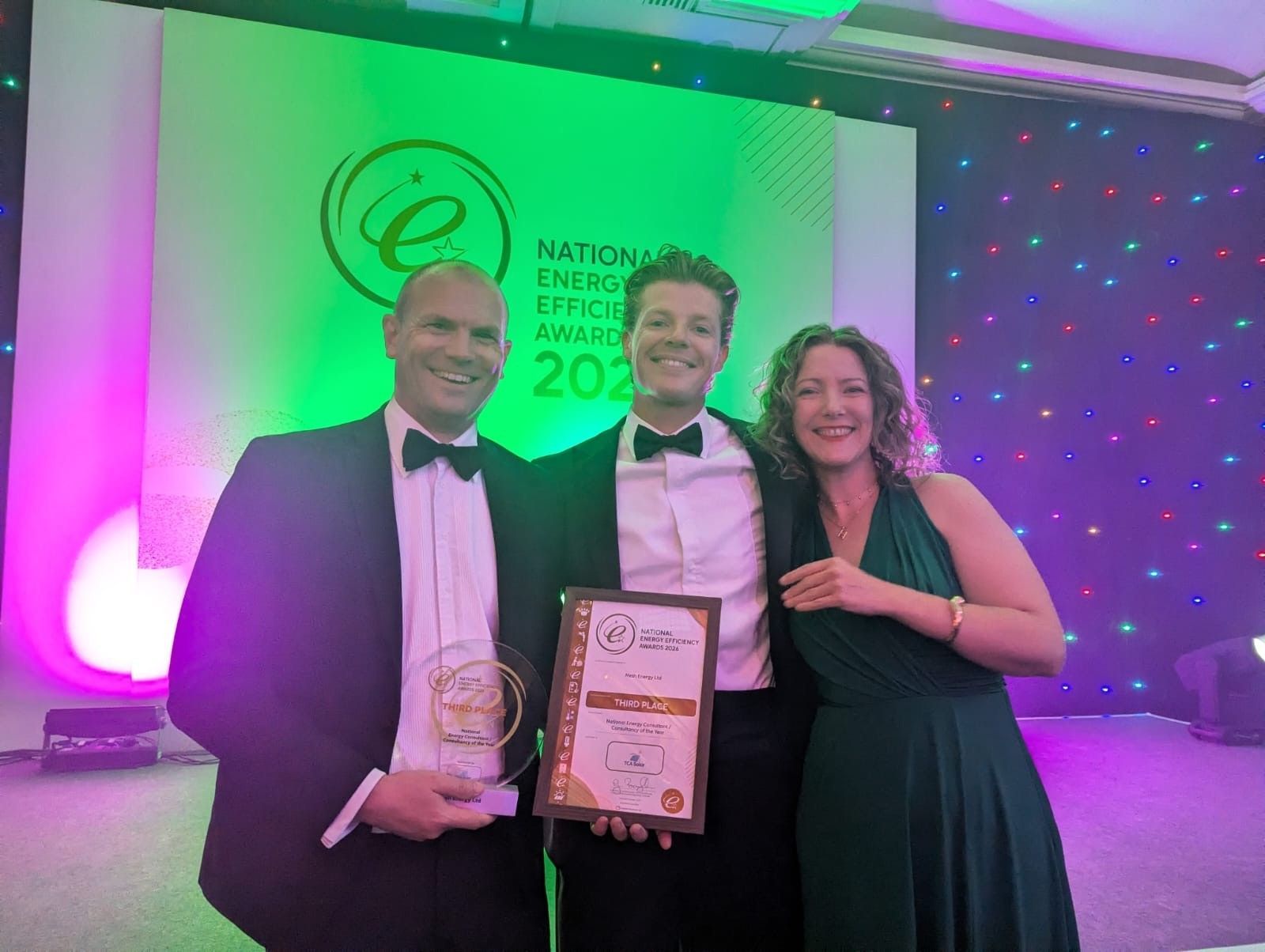
Mesh has been announced as a runner up for Energy Consultancy of the Year at the National Energy Efficiency Awards. This latest accolade follows our success in winning Regional Energy Efficiency Consultancy of the Year at the South East Energy Efficiency Awards. According to Doug Johnson, Founding Director of Mesh: "As one of the smaller, specialist consultancies, this was a significant achievement for such a prestigious award and in a highly competitive category. The awards event was a fantastic celebration of innovation and achievement in improving energy efficiency across the built environment. Our teams are committed to excellence in both building performance analysis and building services design – delivering practical solutions and strategies for our clients to accelerate decarbonisation and improve the energy efficiency of new and existing homes and buildings. It is wonderful to have our team's talent and hard work recognised with this national accolade from the industry." 
7 October 2026
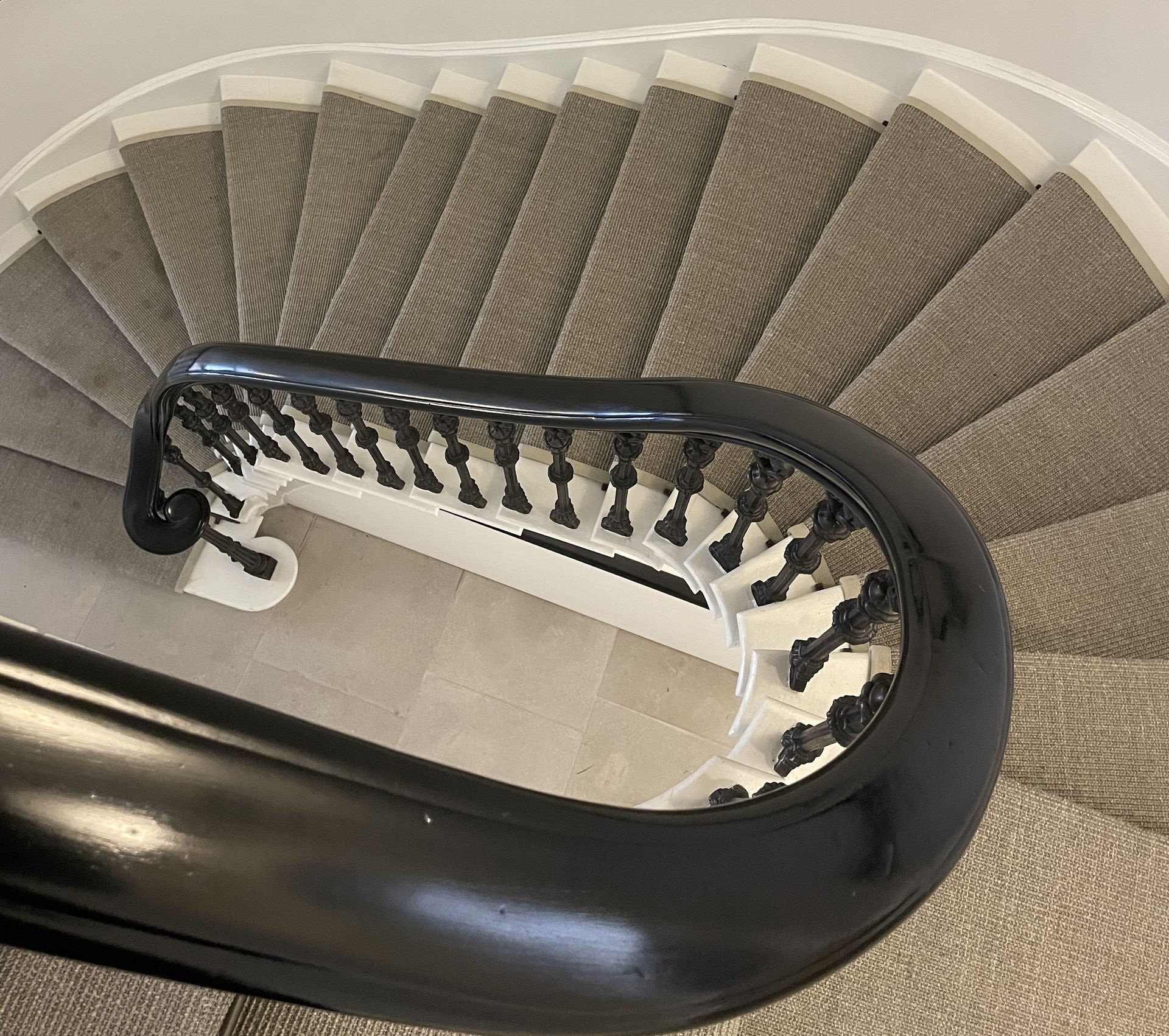
Adapting heritage buildings for modern use creates a particular engineering challenge – how do you deliver comfort and energy performance, within the constraints of a historic building? Doug Johnson, Mesh Founding Director of building performance specialists Mesh, shares his insight from a recent project. When we talk about successful heritage transformations, the conversation usually focuses on the architectural design and the restoration process. Less visible but equally important, is the role of building services engineering. Change of use breathes new life into historic buildings. However, achieving year-round comfort for visitors and occupiers of galleries, offices, hospitality or retail can be challenging, not least when occupancy levels fluctuate. Historic buildings are expected to deliver the same standards of comfort, environmental control and operational performance as modern buildings, yet they were never designed to accommodate contemporary MEP systems. Getting that balance right requires different thinking. A Grade II listed Georgian townhouse in London's Mayfair was recently transformed into a space for contemporary art. This provides a useful illustration of the principles involved and how the challenges were addressed. Dating back to the 1730s, the six-storey building in Mayfair was once home to the Burlington Fine Arts Club. It has now been sensitively converted into a suite of contemporary art galleries for Sadie Coles HQ. The objective was not simply to install heating and cooling. It was to create a comfortable, flexible, efficient and futureproof internal environment whilst ensuring that the engineering services remained almost entirely invisible. The Importance of Designing Around Occupancy A key consideration for intelligent building services design is looking at the predicted occupancy levels and whether these will vary. Museums, galleries, visitor attractions, civic buildings and cultural venues can all move rapidly from quiet periods of low occupancy to large events with significant increases in heat gain and ventilation requirements. Rather than designing for a single occupancy assumption, modelling multiple use scenarios provides a much clearer understanding of how a building needs to perform throughout the year. By analysing different occupancy patterns, environmental conditions and operational requirements, MEP systems can be sized more accurately to avoid both underperforming and over-engineered solutions which increase energy consumption. In heritage projects, this approach is particularly valuable because space for plant and services is often limited. Every piece of equipment needs to justify its inclusion. Early Co-ordination and Integration with the Architectural Design Heritage and listed buildings rarely offer generous service routes. Unlike new-build projects, where risers, ceiling voids and plant spaces can be designed in from the outset, historic buildings often require services to be threaded through a series of constrained voids. This challenge becomes even greater in tall, narrow buildings such as townhouses, where plant may need to serve multiple floors through restricted vertical routes. The lesson is clear – building services engineering has to be designed in from the outset. Early collaboration between architects, engineers and conservation specialists is essential to establish whether the proposed systems are feasible, where equipment can be located and how services can be integrated within the building fabric. The earlier this co-ordination takes place, the greater the opportunity to avoid compromise, reduce project risk and optimise energy efficiency. Increasing Capacity for Heating and Cooling in a Heritage Setting A common response to increasing heating or cooling demands is simply to add more equipment. In many heritage settings, that option is not possible. Planning restrictions, minimising visual impact and noise levels, and conservation requirements often limit the number and location of external plant units. Roofs, courtyards and rear elevations frequently offer little flexibility which demands a more intelligent approach to system design. On the Sadie Coles gallery project, instead of increasing the number of external units, a zoned strategy was developed which matched available plant capacity to individual rooms based on anticipated occupancy patterns and the predicted demand for heating and cooling. This allowed the available capacity to be used with greater energy efficiency whilst maintaining compliance with planning constraints. The broader lesson is that building performance is not solely determined by the quantity of equipment installed. Understanding how spaces are used often unlocks opportunities to achieve enhanced performance within the available infrastructure. Maintaining a Clean Aesthetic The most effective building services design is often the least visible whilst meeting performance requirements. This is particularly true in heritage settings where restored architectural features, historic detailing and carefully considered interiors should remain the focus. Achieving this requires close collaboration with the wider design team. Diffusers, grilles, fan coil units, controls and service routes must be carefully integrated into the architecture rather than be imposed upon it. In gallery environments, there is an additional consideration – the services engineering must not distract from the exhibits themselves, either visually or acoustically. This demands a level of co-ordination and design discipline that goes beyond compliance. Passive Design Matters Any building should be as energy efficient as possible and passive measures often provide some of the most effective opportunities to improve comfort whilst minimising energy consumption. In the Mayfair gallery, a glazed roof lantern was both a beautiful architectural feature and a potential source of overheating. Rather than relying solely on active cooling, actuated roof lights were incorporated into the glazing above to allow warm air to be purged naturally from the space below. Combined with natural ventilation through restored sash windows, this approach reduced cooling demand whilst improving thermal comfort. These principles are not new, but remain highly relevant. Understanding airflow, solar gain and natural ventilation can often deliver significant benefits alongside the design of mechanical systems. Futureproofing Heritage Assets Buildings that have survived for centuries have often done so because they have adapted over time. The services strategy should support that continued evolution. Futureproofing does not necessarily require major additional investment. Sometimes it simply means incorporating connection points, spare capacity or flexible infrastructure that allows future adaptations to be made more easily. In the case of the gallery project, provision was included for supplementary low-level electric heating should the building use change. Such measures may never be required, but they provide resilience and flexibility that can extend the useful life of the building with the least disruption possible. Services Engineering to Support Heritage Buildings Successful heritage refurbishment is not about choosing between conservation and performance. It is about achieving both. The most effective building services solutions are those that support the architectural and client vision, improve comfort, reduce energy consumption and remain largely unseen by the people using the building. When done well, engineering becomes part of the fabric of the building rather than an addition to it. That is ultimately what intelligent building services design should achieve – modern performance delivered in a way that respects the past whilst preparing buildings for the future. The Project Team: Client: Sadie Coles HQ Lead contractor (design and delivery): Work Ltd Architectural partner: Giles Reid Architects MEP design / building performance: Mesh About Mesh Mesh offers a range of design and engineering services to help organisations in the public and private sectors to improve the energy efficiency of new and existing buildings, housing and estates. This includes support for architects; planning; thermal modelling and overheating analyses; carbon reduction strategies; feasibility studies for renewable technologies; MEP design, and regulatory compliance.