

Renewable technology in sustainable builds: Everything you need to know about solar power
Farhan Ganam
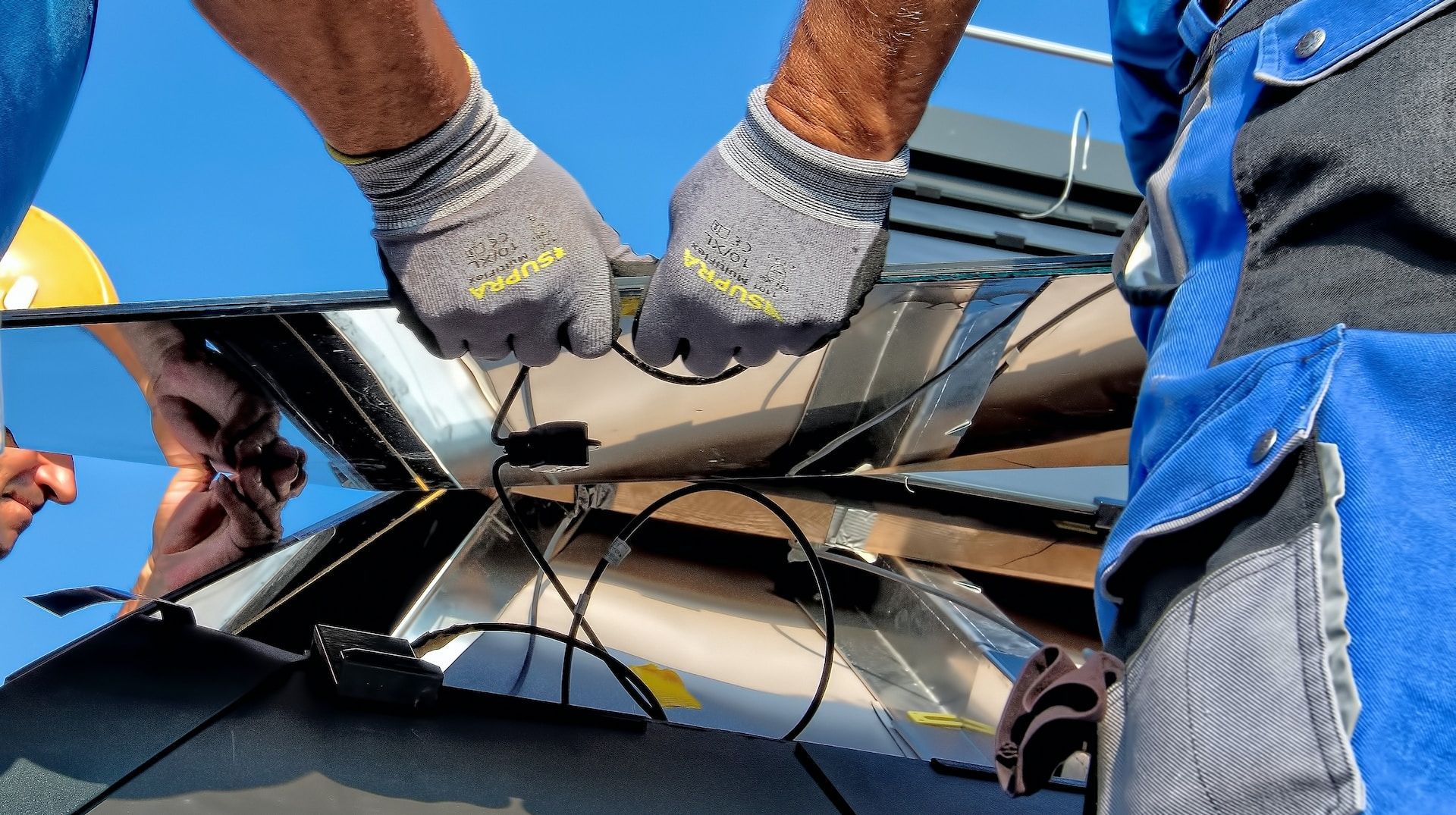
In the pursuit of sustainable development, architects, builders, and homeowners alike are increasingly turning to solar power as a key component of sustainable building practices. One would think solar energy is all about harnessing sunlight and turning into electricity. However, what happens behind this process is something some of us might not be aware of. Let's take a deep dive into understanding the incredible potential of solar power.
An introduction to solar
The concept of solar energy dates back to ancient civilization, where people would use magnifying glasses to focus the sun's rays to create fire. Fast forwarding to the 19th century, solar power's true inception began when French physicist Alexandre Edmond Becquerel made a staggering discovery on how sunlight can be used by certain materials to generate electricity. The popularity of solar power has been growing due to the fact that harnessing the sun's power for generating electricity is one of the most environmentally friendly processes out there.
The two main technologies that harness the sun’s power are heat and electricity. These are known as solar heat and solar power:
- Solar heat is a process where sunlight is used for heating water in domestic and commercial buildings. This technology is more popular in areas where there is high concentration on solar radiation.
- However, when it comes to countries like the UK which aren’t always so sunny, solar power is a widely preferred option. Solar power is all about how electricity can be generated by using the contact of sunlight on a material. Let’s take a closer look at solar power to understand it better.
How does solar power work?
To keep it simple, you’ll generate electricity when the electrons of the atom flow from positive to the negative terminal of the element. When Becquerel discovered how an element can use sun energy to produce electricity, the term “photovoltaic effect” was coined. Through the photovoltaic effect, electricity generation largely relies on one element, namely silicon. The main purpose of using silicon is because it's a semiconductor.
What this means is, if you combine them with different materials, the semiconductor can easily change its atomic properties. This process of combining is also known as ‘doping’.
Regarding silicon, this is done by:
- Adding boron, which makes silicon negatively charged; and
- by adding phosphorus, making it positively charged.
In ‘solar terms’, these are known as n-type and p-type junctions.
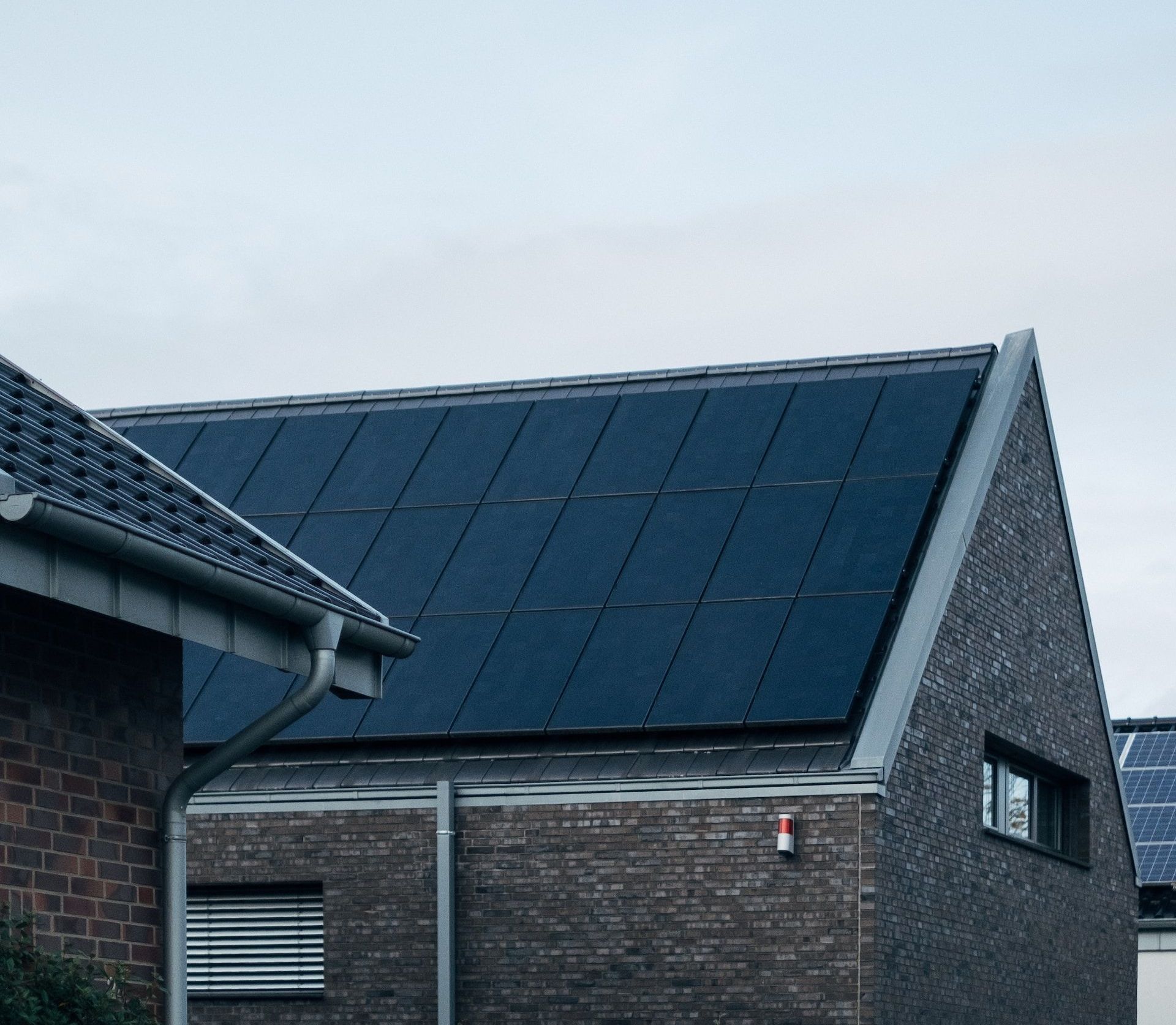
When p-type and n-type materials are sandwiched together, they create something called a ‘solar cell’. When these junctions are combined, they seldom do anything other than transfer electrons in themselves.
However, the magic happens when sunlight hits this material. The energy of photons in sunlight makes electrons flow from n-type to p-type, due to the former being negatively charged and later being positively charged.
This transfer occurs near contact and makes the center region eventually stable. The stable state restricts the flow of electrons and thus creates what is known as the ‘depletion zone’. This zone acts as a barrier between the n-type and p-type junction contact and hence the flow of electron stops.
However, imagine what happens if you use a circuit that connects both n-type and p-type externally? The electron starts to flow again.
Now this electron flow is exactly how electricity is generated through photovoltaic effect. Fascinating, isn’t it?
The different types of solar panels
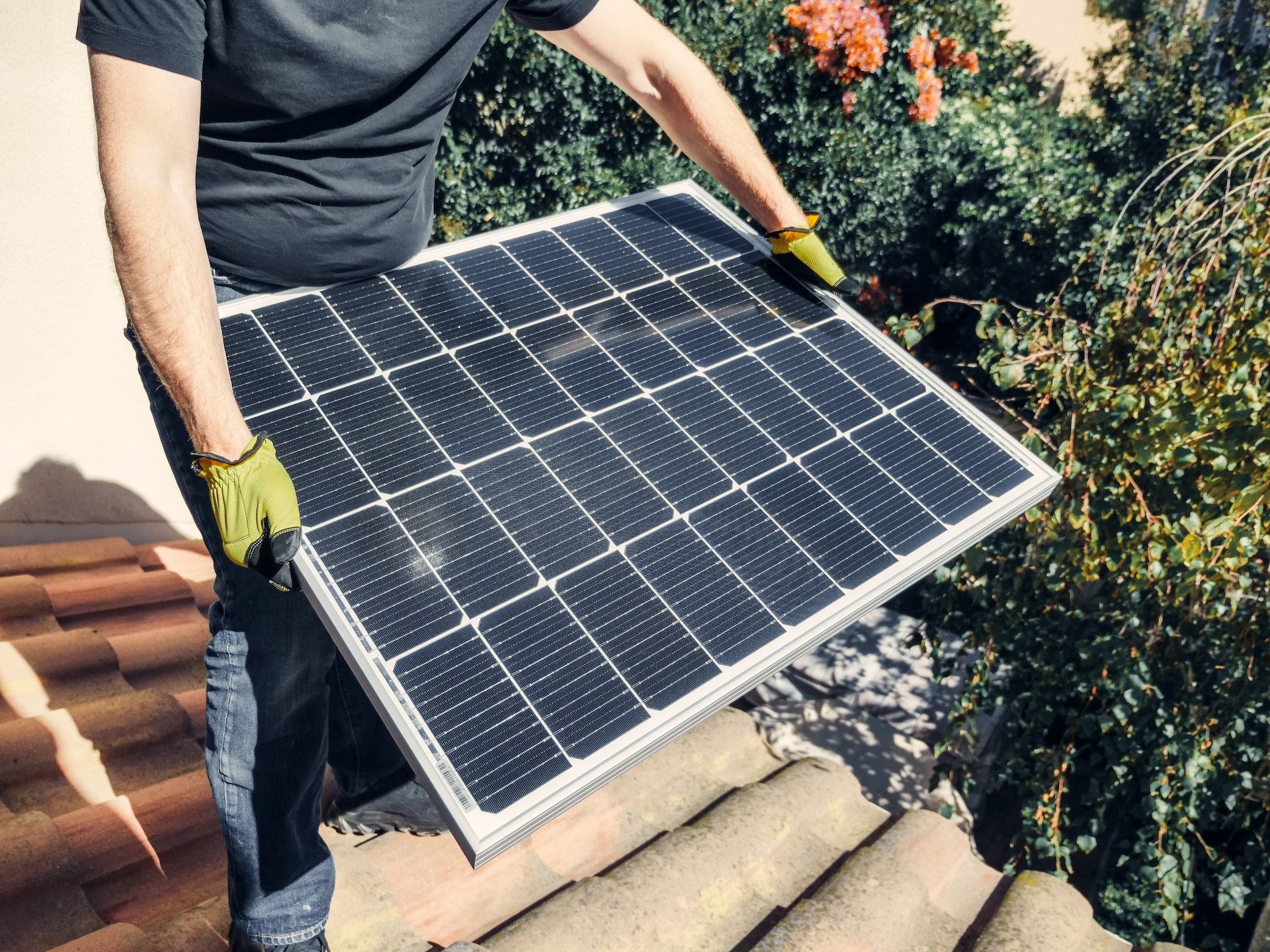
When a group of solar cells are combined together, they’re known as solar panels or solar photovoltaic (PV) panels. Solar panels come in various sizes and types. These sizes reflect the power one solar panel can deliver. With how technology has evolved, there are currently 4 types of solar power technologies:
Crystalline silicon - This type of technology is the first generation of solar panels, working on the basic principle of solar electricity generation explained earlier.
This type of panel is further categorised into two types:
- Polycrystalline - which are made from fragments of silicon; and
- Monocrystalline - made from single crystal silicon.
The key difference is the efficiency each one gives. Most commercially available polycrystalline PV has an efficiency ranging from 17-18% and has capacity between 50 kWp to 350 kWp. However, monocrystalline PV efficiency often goes up to 22% efficiency with capacity of up to 530 kWp. In the UK, monocrystalline is preferred due to its efficiency and high capacity.
Thin-film solar technology - This type of solar panel is constructed using thin layers of semiconductor materials like cadmium telluride (CdTe), copper indium gallium selenide (CIGS), or amorphous silicon (a-Si). The key difference between this panel and crystalline silicon type is the flexible nature and the possibility of integration into curved or irregular surfaces. Thin-film performs better in low-light conditions and has a lower temperature coefficient, meaning it can maintain higher energy production in hot climates. However, the overall efficiency falls between 9-15% which restricts its commercial use.
Dye cell technology - This type of cell is also a type of thin-film with a key difference that it uses dye as the light absorbing material. It consists of several layers including semiconductor material (typically titanium dioxide), electrolyte and electrodes. The dye molecule in the semiconductor layers captures photons from sunlight and transfers the absorbed energy to semiconductor generating electric current. One of the advantages of dye cells is their ability to capture a broad range of the solar spectrum, including visible and infrared light, making them more efficient in low-light conditions compared to other solar cell technologies. The efficiency lies between 4-10%.
Perovskite solar technology - This type of solar cell utilises perovskite material such as methylammonium lead iodide (MAPbI3) as the light absorbing layer. One of the key advantages of perovskite solar cells is its high power conversion efficiency potential. They’ve even surpassed the efficiency levels of traditional silicon based solar cells in a relatively short period. Their efficiency has reached up to 30%. The key disadvantage of why the panels are not commercially used is the fact that their life span is only about 5 years compared to 20 - 25 years for silicon based solar cells.
Is the UK climate suitable for solar installation on a small residential or large commercial/industrial scale?
Despite its reputation for overcast and rainy weather, the UK's climate is definitely suitable for solar installation. While the amount of sunlight received might be less compared to sunnier regions, solar panels can still generate large amounts of electricity. Typically, monocrystalline solar panels are considered to be the most preferred due to their high capacity and efficiency.
- On a small residential scale, solar panels can be installed on rooftops to generate electricity for homes. The electricity generated can be used to power household appliances and reduce reliance on the grid, leading to potential cost savings and a lower carbon footprint.
- For large commercial and industrial installations, solar panels can be deployed on rooftops, open land, or even integrated into the design of buildings. These installations can help meet the energy needs of businesses, reduce electricity costs, and contribute to sustainability goals.
It’s important to consider factors such as available space, orientation, shading, and the specific location when planning solar installations in the UK. Conducting a site assessment and consulting with solar experts can help determine the feasibility and optimise the performance of solar systems based on the unique characteristics of each location.
How does a solar rooftop system work?
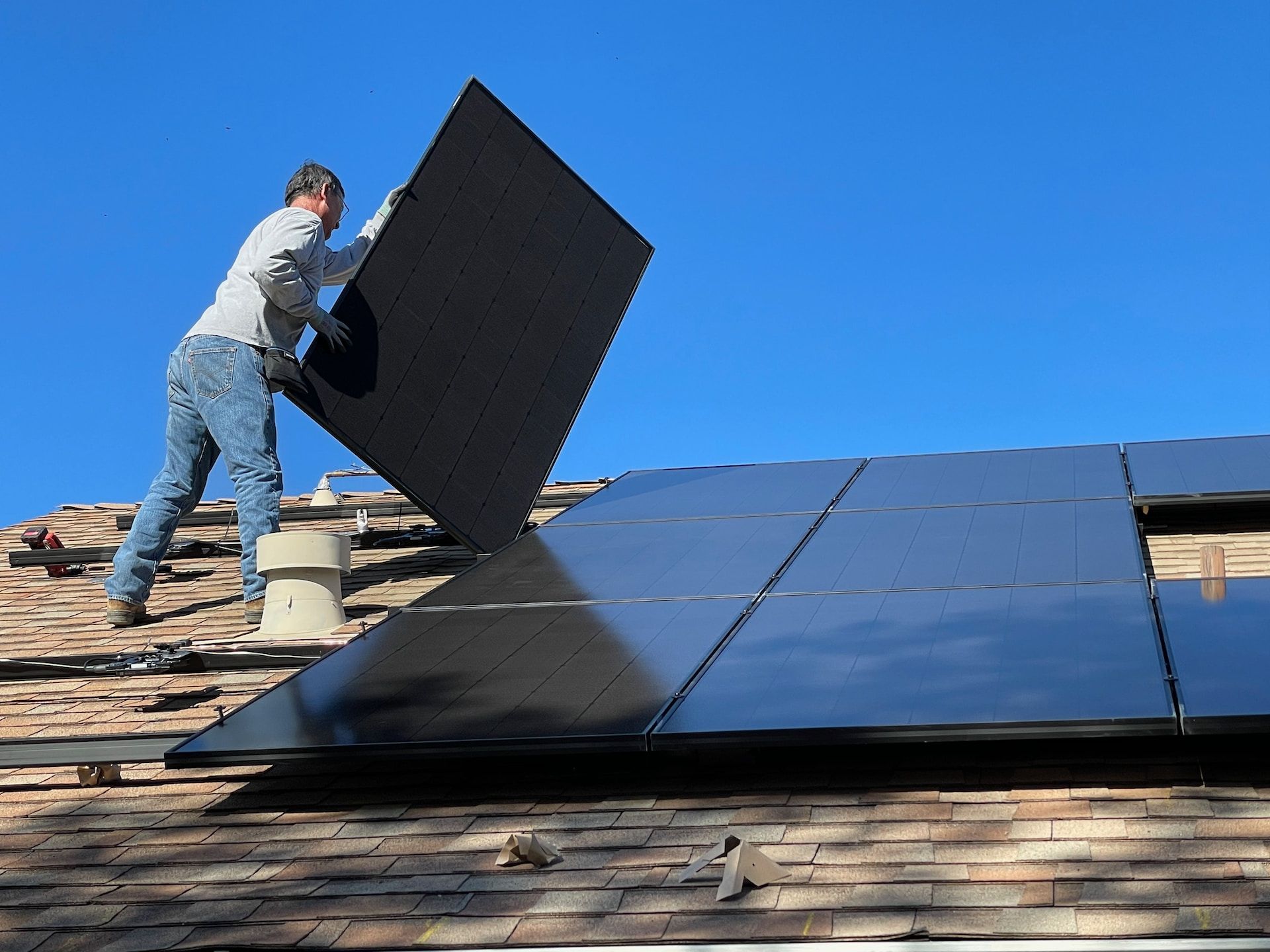
A typical solar rooftop has 3 main components:
- solar panels
- an inverter
- a bi-directional meter
When electricity is generated through solar panels, the DC current is supplied from solar panels through the circuit to the inverter. The function of an inverter is that it converts the DC into AC, which is what your home requires.
After this conversion, the AC goes into the bi-directional meter, where electricity is supplied to appliances or gets exported to the grid if there is excess. The meter also helps in making sure that the electricity supply is not interrupted even when the solar rooftop system is not generating at night.
How much does a solar rooftop system cost and what is the expected payback?
The cost of a solar rooftop system depends on different factors, including size of the system, type of the panels and components used, and the complexity of installation. In the UK, the average cost of a solar rooftop system is around £4,000 to £8,000 per kilowatt (kW) of installed capacity. Therefore, a 5 kW solar system would cost around £20,000 to £40,000.
It’s worth noting that for the solar system to pay for itself, it all depends on factors like upfront cost, the electricity rates, the system's energy generation, and any financial incentives. On an average, it takes around 8 to 10 years for payback on systems installed in the UK.
Are there any financial incentives or schemes from the government?
As of today, there are two main schemes backed by the UK government to support installation of solar rooftop systems. The 0% VAT on energy-saving products & Smart Export Guarantee (SEG).
- 0% VAT - In March 2022, Chancellor Rishi Sunak, now the Prime Minister of the UK, announced that the VAT for energy saving products such as solar panels & heat pumps will go down from 5% to 0%. According to the UK Government, this reduction allows for savings of about £1,000 in installation and about £300 in operating cost. This scheme is planned to end in March 2027. For more details, you can go through the government's website.
- Smart Export Guarantee (SEG) - The SEG came into effect in January 2020. The key advantage of this scheme is that for any small scale electricity generator, the owner can get payments from the grid to export any surplus energy. This scheme adds the obligation of grip suppliers to offer export tariff rates to their customers. Typically, the rates range from 1p and 7.5p per kWh. It should be noted that in order to qualify for this scheme, the homeowner must install a bi-directional meter to allow the import and export of electricity.
How can Mesh help?
Mesh energy provides consultation and designing solutions for installing solar rooftop systems in both residential and commercial property. It’s part of our feasibility study where we look into various renewable energy options to explore how it can affect the efficiency of the overall house both environmentally and economically. At Mesh, we believe in a fabric-first approach and examining various construction options that promote sustainability. This way, we make sure the building energy demand is minimal, which in turn helps in reducing the size of renewable systems such as heat pumps and solar rooftop systems. To talk more about installing a system for your project, get in touch today.
SHARE THIS POST WITH YOUR NETWORK


Reducing the Environmental Impact of our Business and Supporting Global Carbon Reduction Initiatives