

Why overheating analysis is a key factor in sustainable building design

Gauri Kulkarni
7 June 2023

Overheating in buildings refers to when the internal temperature of a building exceeds comfortable or safe levels. It can occur when the heat gain within a building exceeds the heat dissipation, leading to a gradual increase in temperature. 

The effects of overheating

Overheating can have several negative consequences. It can lead to discomfort and decreased productivity for occupants, especially in work or residential environments. Additionally, overheating can strain cooling systems, leading to higher energy consumption and increased electricity bills. It can also have health implications, particularly for vulnerable individuals such as the elderly, children, or those with pre-existing health conditions, as it may exacerbate heat-related illnesses.


To mitigate overheating, various strategies can be employed. These include improving insulation, using shading devices such as blinds or external louvres, optimising natural ventilation, utilising energy-efficient cooling systems, and incorporating passive design principles that maximise the building's ability to regulate its internal temperature. Building codes and standards often include guidelines to address overheating and promote energy-efficient designs that minimise heat gain and ensure occupant comfort.


Overheating is also directly linked to the current climate crises. In the context of climate change, ‘overheating’ refers to the increase in temperature beyond normal or historical levels, which has significant implications for the environment, ecosystems, and human well-being. It is a direct consequence of global warming, which is primarily caused by the accumulation of greenhouse gases in the Earth's atmosphere.
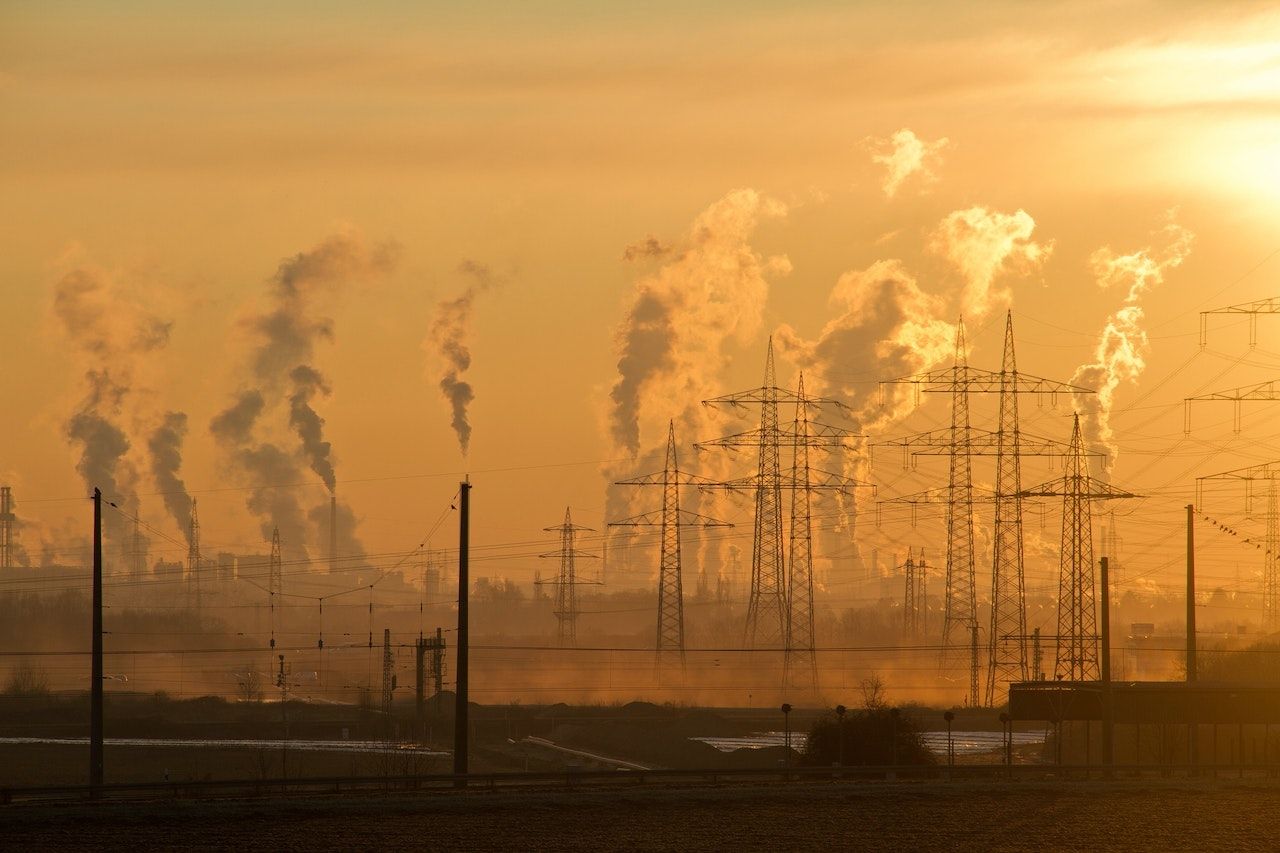

Smoke billowing from industrial smokestacks at sunset, with power lines in the foreground.

Climate change is driven by the release of greenhouse gases, such as carbon dioxide (CO2), methane (CH4), and nitrous oxide (N2O), into the atmosphere. These gases trap heat from the sun and prevent it from escaping back into space, leading to a gradual increase in the Earth's average temperature. This phenomenon is often referred to as the greenhouse effect.


As the Earth's temperature rises due to climate change, it affects various aspects of the environment and ecosystems, leading to overheating in different forms: Heatwaves, urban heat Island effect, ecosystem disruption, and the melting of glaciers and ice.


Overheating can happen due to several factors:

1. Inadequate insulation: Poor insulation in buildings allows excessive heat transfer from outside to inside, making it difficult to maintain a comfortable indoor temperature.


2. Solar radiation: Intense sunlight and lack of shading devices or proper glazing can result in excessive solar radiation entering the building, leading to increased temperatures.


3. Urban heat island effect: Urban areas, with their high concentration of buildings, concrete, and asphalt, tend to retain and radiate heat more than surrounding rural areas. The lack of green spaces, trees, and vegetation exacerbates this effect, contributing to higher temperatures within cities.


4. High energy consumption: Inefficient cooling systems or excessive use of energy-intensive equipment, such as air conditioning units, can generate additional heat within buildings and contribute to overheating.


Air conditioning unit mounted on a dirty, moldy brick wall.

The negative impacts to overheating:

1.  Occupant discomfort: High indoor temperatures can lead to discomfort, reduced productivity, and impaired concentration for occupants in residential, commercial, or institutional buildings.


2.  Health risks: Prolonged exposure to elevated temperatures can increase the risk of heat-related illnesses, particularly for vulnerable populations, such as the elderly, children, and those with pre-existing health conditions.


3.  Increased energy demand: Overheating often results in higher energy consumption as occupants rely more on cooling systems to maintain comfortable temperatures. This leads to increased electricity bills and puts additional strain on energy infrastructure.


How can we minimise overheating?

Overheating can be addressed by incorporating the following measures which can help in mitigating the effect:

  • Passive design
  • Energy-efficient cooling systems 
  • Green infrastructure
  • Building codes and regulations
  • Education 
  • Awareness


By implementing these measures, the built environment can be better prepared to address the challenges of overheating. These strategies are included in overheating analysis, which is a great way to start off your project.


What is overheating analysis?

Overheating analysis is a process of assessing and evaluating the risk and severity of overheating in buildings or urban areas. It involves analysing various factors that contribute to excessive heat build-up, understanding the potential impacts on occupants, and identifying appropriate strategies to mitigate overheating.


The goal of overheating analysis is to quantify and predict the occurrence of overheating in each context, such as a specific building or an urban neighbourhood. It typically involves the following steps:

  1. Data Collection and surveys of the property.
  2. Modelling and simulation led by building performance consultants.
  3. Temperature analysis to understand and access indoor temperatures of a building, as well as understand overheating risk.
  4. Evaluation of risk factors, such as solar exposure, orientation, glazing types, shading devices, insulation levels, and ventilation strategies.
  5. Occupant comfort assessment.
  6. Mitigation strategies, with a combination of passive strategies that work after analysis for that particular property.
  7. Sensitivity analysis.
  8. Reporting and recommendations by presenting analysis findings in a clearly articulated report, including solutions and recommendations for the architects, designers and the clients.


Overheating analysis is particularly relevant in the context of climate change, as rising temperatures and changing weather patterns can increase the risk of overheating. By conducting thorough analysis and implementing appropriate strategies, it is possible to design and manage buildings that are more resilient to overheating, promote occupant comfort, and minimise energy consumption.


What is thermal comfort analysis?

Thermal comfort analysis is the process of evaluating and assessing the thermal conditions within a building to determine whether the occupants are likely to feel thermally comfortable. It involves analysing various factors that influence human perception of thermal comfort, such as air temperature, humidity, air velocity, radiant temperature, and clothing insulation.

Raindrops on a window, blurred blue background. Dark, moody, outdoor scene.

The goal of thermal comfort analysis is to ensure that the indoor environment provides a comfortable and pleasant thermal experience for occupants, which can contribute to their well-being, productivity, and overall satisfaction. It is an important consideration in the design, operation, and assessment of buildings, especially in areas where occupants spend significant amounts of time, such as offices, schools, hospitals, and residential spaces.


Additionally, thermal comfort analysis can assist in the design and operation of energy-efficient buildings by identifying opportunities for passive strategies and optimal control of HVAC systems to maintain comfort while minimising energy consumption.


How have buildings become warmer for occupants?

Over the years, buildings have undergone various changes to improve thermal comfort and create warmer environments for occupants. These changes have been driven by advancements in building science, energy efficiency considerations, and a greater understanding of occupant comfort needs. Some key developments include:


1. Improved insulation: Building insulation has significantly evolved with the introduction of new materials and techniques to enhance thermal resistance. Insulation helps reduce heat transfer through walls, roofs, and floors, thereby minimising heat loss in colder climates and heat gain in warmer climates.


2. Enhanced building envelopes: Building envelopes, including walls, roofs, and windows, have been designed to be more airtight and better insulated. This helps reduce drafts, minimise air leakage, and maintain a more stable indoor temperature.


3. High-performance glazing: Energy-efficient windows and glazing systems have become more prevalent. They feature low-emissivity coatings, multiple glazing layers, and gas-filled cavities to improve thermal insulation and reduce heat transfer.


Dining table set for a meal in a bright room with a large window and sofa.

4. Passive solar design: Incorporating passive solar design principles has become more common. This includes optimising building orientation, utilising appropriate shading devices, and incorporating features like solar chimneys, thermal mass, and natural ventilation to regulate indoor temperatures and harness solar heat gain.


5. Energy-efficient heating systems: More efficient heating systems, such as high-efficiency furnaces, heat pumps, and radiant floor heating, have been developed. These systems provide effective and comfortable heating while minimising energy consumption.


6. Advanced HVAC technologies: Heating, ventilation, and air conditioning (HVAC) systems have evolved to offer improved control, energy efficiency, and occupant comfort. Features like variable speed drives, zoned heating and cooling, and smart thermostats allow for better temperature regulation and personalised comfort settings.


7. Building codes and standards: Building codes and energy efficiency standards have become more stringent, mandating improved thermal performance and energy efficiency in new construction and renovations. These regulations drive the adoption of energy-saving practices and encourage the use of high-performance building materials and systems.


8. Building management systems: The use of building management systems (BMS) and smart technology has increased. These systems monitor and control various building parameters, including heating and cooling, to optimise energy efficiency and maintain desired indoor conditions.


9. Increased focus on occupant comfort: There is a greater emphasis on understanding and meeting occupant comfort needs. Research and advancements in thermal comfort modelling, such as adaptive comfort models, have influenced building design and operation to provide optimal thermal conditions for occupants.


These changes in building design, materials, systems, and regulations have collectively contributed to creating warmer and more comfortable indoor environments for occupants. They aim to strike a balance between energy efficiency, occupant well-being, and sustainability, ensuring buildings are better equipped to meet the needs of occupants while reducing environmental impact.


What can impact thermal comfort?

Ventilation, solar gains, and airtightness are important contributing factors that impact the thermal comfort and warmth of buildings. Let's explore these factors:


Ventilation

Adequate ventilation plays a crucial role in maintaining a comfortable indoor environment. It involves the exchange of fresh air with stale air to remove pollutants, control humidity, and regulate indoor temperatures. In terms of warmth, ventilation can contribute in two ways:


1. Heat recovery ventilation: Modern ventilation systems often incorporate heat recovery mechanisms. These systems extract heat from the outgoing stale air and transfer it to the incoming fresh air, reducing heat loss and improving energy efficiency.


2. Natural ventilation: In buildings with good natural ventilation design, the flow of air can be controlled to optimise the distribution of warmer or cooler air. For instance, in warm weather, opening windows strategically can facilitate cross-ventilation, allowing cooler air to enter and warm air to exit.


Sunset over a field of yellow flowers, golden light.

Solar gains

Solar gains refer to the heat gained from the sun's radiation. Proper management of solar gains can contribute to warmth in buildings. Key considerations include:


1. Solar orientation: Building design can optimise solar gains by orienting windows, glazing, and building surfaces to maximise or minimise solar exposure based on the local climate. For example, in cold climates, south-facing windows allow for more solar heat gain during winter months.


2. Shading devices: Employing shading devices, such as overhangs, blinds, or external louvres, can help control the amount of solar radiation entering the building. These devices prevent excessive solar heat gain during hot seasons while allowing desired heat gain during colder periods.


3. Thermal mass: Thermal mass refers to the ability of building materials to store and release heat. Materials with high thermal mass, like concrete or stone, can absorb and retain solar heat during the day, releasing it slowly at night, contributing to the warmth of the building.


Airtightness

Airtightness refers to the level of air leakage or infiltration through the building envelope. It impacts both energy efficiency and thermal comfort by reducing heat loss or gain. Considerations for airtightness include:


1. Building envelope sealing: Proper sealing of gaps, cracks, and joints in the building envelope, including walls, windows, and doors, minimises air leakage. This helps prevent drafts and heat loss, improving energy efficiency and maintaining a warmer indoor environment.


2. Air barrier systems: Effective air barrier systems, consisting of materials like membranes or sealants, can be installed within the building envelope to enhance airtightness and limit uncontrolled air movement.


3. Controlled ventilation: While airtightness is important, it should be balanced with controlled ventilation to ensure sufficient fresh air exchange. This is typically achieved using mechanical ventilation systems that provide controlled airflow while minimising unwanted heat loss or gain.


Optimising ventilation, managing solar gains, and ensuring appropriate airtightness contribute to creating warmer and more comfortable indoor environments. Building design, insulation, and the use of energy-efficient technologies and systems are key considerations in achieving these goals.


Combining the above, we can form a basis of how overheating calculation and analysis can be undertaken. Taking the key data to identify overheating in a property, targeting those overheated spots, understanding the months a building is most likely to overheat, using correct temperature and weather data files, using accurate thermal templates and a thorough journey documentation is what helps mitigate overheating in a property.

How Mesh can help

At Mesh, our analysis eradicates overheating from a property by using a step-by-step high end calculated approach. We take all the necessary steps and passive design strategies to not only reduce/remove overheating from a property, but also to reduce energy bills. We can perform calculations related to Part O compliance, TM59, TM52, general overheating and planning for new builds, as well as provide solutions for domestic and non-domestic projects. Mesh believes in using the most resourceful passive design strategies to remove/reduce overheating in both new build and retrofit projects. 


FIND OUT MORE

SHARE THIS POST WITH YOUR NETWORK

Advertisement for an embodied carbon calculator (V9). It offers quick assessments, report generation, and target comparison.
by Doug Johnson 3 February 2026
Mesh has launched a new version of our Embodied Carbon Calculator (V9) to help architects and building designers working at concept stage to generate accurate embodied carbon assessments in minutes. This cost-effective tool has a host of features for automated, super-fast report generation: Architects can now input simple area and materials data and see how their designs perform against RIBA 2030 and LETI targets Different design options can be compared and assessed More than 95% accuracy, even at concept stage Calculate relative embodied carbon values for a wide range of materials and building typologies - input up to 10 different construction types for walls, floors, roofs and other building elements Create 'favourite' custom element build-ups to save time across multiple projects Accurate results to inform planning applications, client reporting and RIBA Award submissions. Watch the demo video here and download the latest version for a one-off fee from our Meshwork platform here .
The Planning consultant's perspective on Mesh and Planning 84
by Doug Johnson 24 January 2026
Rob Hughes, a specialist Paragraph 84 planning consultant shares his thoughts on Mesh and the drivers for success for complex planning projects
Modern, circular building with wooden slats, glass windows, and a grassy field in front.
by Doug Johnson 15 January 2026
Designing a new home in open countryside has always required compelling justification. Under the National Planning Policy Framework (NPPF), Paragraph 84 is one of the few legitimate planning pathways for the creation of new homes on rural or Green Belt land. It is a stringent route – intentionally so – that demands both exceptional design quality and demonstrable sustainability and environmental considerations. The term ‘Paragraph 84′, is the latest iteration of the policy, which was first established in 1997 to set out how new homes can be built in open countryside. Setting a High Bar for Design Quality and Sustainability For architects and planning consultants, Paragraph 84 is an opportunity to create inspirational, landmark architecture. The requirements of the policy set a high bar for architects to achieve with their approach to design. But it is also a policy area where planning authorities demand robust technical evidence from the earliest design stages. These projects have to be designed sensitively to their location and are subject to rigorous review at each stage – from concept, technical design, planning and construction. Without addressing this, proposals will fail to pass the design review panels and achieve planning, leading to costly redesigns and delays. What is Paragraph 84 Designed to Achieve? Paragraph 84 exists to protect and enhance our most sensitive landscapes. It is a national policy pathway that allows new dwellings to be approved for development in open countryside or on Green Belt land when: • The design quality is exceptional • The architecture reflects and enhances the location • The new home would achieve exemplary environmental performance • The proposal results in a dwelling that could not have been delivered using conventional development criteria. Paragraph 84 homes must blend into the landscape and deliver outstanding environmental performance. Projects are typically large, bespoke private homes, where form and materiality relate directly to the context of the site. Schemes draw inspiration from local heritage or the landscape. For example, one of our Paragraph 84 projects sited close to a river was interpreted as two interlocking river boats, or another design near an ancient burial mound was built into a hillside. Paragraph 84 is, at its core, a policy about contextual, site-specific, sustainable landmark design. Why the Number of Paragraph 84 Projects is Increasing At Mesh, we have seen a sharp rise in Paragraph 84 projects in the past year and that trend is continuing. Several converging social, environmental and planning policy trends are driving this: People are moving out of cities – High net worth individuals are increasingly buying rural land to build homes that deliver space, security, privacy and connection to nature. Remote working and advances in technology have accelerated this shift, as has a growing desire to move away from highly urbanised environments. A cultural appetite for exceptional homes – The ‘Grand Designs effect’ and social channels such as Instagram have fuelled the ambition for highly individual, statement homes in rural environments. Planning policy is becoming more rigorous – Local authorities are enforcing sustainability and environmental design requirements far more strictly. Paragraph 84 schemes must now present high-level, evidence-based technical data earlier in the design process and with far greater precision. National planning policy is reinforcing sustainability – Paragraph 84 favours homes that embody sustainable construction, low-carbon energy strategies and responsible material use. As national guidance tightens, planning authorities expect quantifiable evidence rather than simply narrative intent. Demand amplified by Paragraph 84e – Even stricter criteria apply to proposals within National Parks and Areas of Outstanding Natural Beauty, where the architectural and technical design must reach an even more exceptional threshold. This further increases reliance on specialist input for both planning and building engineering. The Role of Building Performance Engineering in Paragraph 84 and Why Early Involvement Matters Paragraph 84 homes do not secure planning consent without high-quality technical input and evidence-based data. Architectural excellence must be matched with detailed environmental studies and data and that requires specialist expertise in renewable technology, performance engineering and building physics. Mesh is one of the UK’s most experienced building-performance specialists in this area and has supported many Paragraph 84 projects since the inception of the policy. Its engineers work with architects and planning consultants typically from RIBA Stage 2, ensuring proposals are grounded in robust, defensible technical data long before design freeze. The key areas of building performance engineering to consider are summarised below. 1. Design Review Panel Preparation Successful Paragraph 84 applications depend heavily on the quality of evidence presented to Design Review Panels (DRPs). These panels expect a clear, data-backed narrative that explains: • The sustainable design strategy • The performance metrics and modelling that underpin design decisions • The rationale for innovation and how that responds to site context • How the scheme meets the ‘truly outstanding’ and ‘exceptionally designed’ criteria of the planning policy. This preparation must be done collaboratively across the design team, with architects, planning consultants and building engineers all aligned. The strength of this early narrative often determines whether a scheme progresses or stalls at the first review. 2. Sustainability and Building Physics Analysis Because Paragraph 84 homes are held to the highest standards of environmental performance, applicants must provide robust technical analysis early in the design process. This typically includes: • Part L thermal efficiency and heat-loss calculations • Part O overheating analysis – often requiring full TM59 dynamic thermal modelling, particularly for large homes with a high level of glazing • Part G water-efficiency calculations • Energy performance modelling. The technical evidence must demonstrate that the building can achieve year-round comfort, comply with overheating regulations, and meet or exceed building-performance requirements. Applying passive measures, such as ventilation strategy and thermal efficiency, play a critical role in compliance with the latest regulations. 3. Energy Strategy and Low Carbon Technology Feasibility Studies A comprehensive energy strategy is a core expectation under Paragraph 84. Design teams must explore low carbon or renewable energy technologies such as: • Air and ground source heat pumps • MVHR and passive ventilation strategy • Underfloor heating • Solar PV and battery storage. The objective is not simply to specify ‘green’ technologies, but to demonstrate – through accurate, interpretable data – that the proposed home will operate efficiently, integrate well with the landscape, and deliver reasonable long-term running and maintenance costs. The Design Review Panels increasingly expect a credible, quantifiable whole-site strategy, not simply a list of technologies. 4. Whole Life Carbon and Material Assessments Given the size and bespoke nature of many Paragraph 84 projects, design teams must account for the impact of both operational and embodied carbon. Data typically required includes: • Embodied-carbon calculations • Material sourcing such as the volume of reclaimed stone or building material versus materials transported to site and from where • Circularity and waste-minimisation principles • Justification for material choices in relation to the local area and the project’s sustainability objectives. DRPs will look for a clear link between the architectural concept, the landscape context, and the environmental logic behind building material decisions and product specifications. 5. Building Services Strategy A common pitfall in Paragraph 84 proposals is not addressing the building services design at an early stage. For these often-large homes, the services strategy has implications for form, structure and landscape integration. Early-stage clarity is therefore required on: • Sizing of plant and equipment • Ventilation strategy and riser requirements • Space planning for plant rooms and roof-mounted equipment • Any constraints that may affect massing or design freeze. Without this early work, design and planning teams risk significant redesign at a late stage – which can seriously delay planning or even undermine the planning case. 6. Ongoing Workshops and Team Co-ordination Paragraph 84 planning approval depends on a cohesive, aligned design team. Workshops throughout RIBA Stages 2 and 3 ensure that: • The environmental strategy and building efficiency match the architectural intent • Technical modelling supports the design narrative being presented to DRPs • The whole team can confidently articulate the detailed evidence behind the proposal • Potential risks of non-compliance are identified well before design freeze. Planning authorities expect clearly reasoned, data-supported submissions – and this level of co-ordination is essential to delivering that. What are the Common Pitfalls to Avoid in Paragraph 84 Projects? Despite the growing demand, design and planning teams can fall into predictable traps. The consequences can be severe – lost design time, repeated panel cycles, unnecessary cost, or complete refusal. 1. Involving building-performance consultants too late Design teams should avoid completing early concept designs without taking account of the implications of thermal performance, overheating risk or services integration. Unless engaged early, by the time the building engineers are brought in, it can be impossible to accommodate regulations or planning requirements into the design – incurring additional work, time and cost. 2. Attending DRP meetings without sufficient technical evidence or data Design Review Panels expect detailed data, not aspirations. Without robust modelling, sustainability metrics or strategy justification, the proposal is unlikely to be endorsed. 3. Overlooking overheating in highly glazed designs Large Paragraph 84 homes frequently feature a high level of glazing to allow panoramic views over the countryside. This increases the risk of overheating. Compliance requires either the simplified Part O route or TM59 dynamic modelling – and most high-specification designs require the latter. Failing to allow for this will result in design amendments that can significantly delay the planning process. 4. Freezing the architectural design before the services strategy is confirmed If plant rooms are undersized, or if roof-mounted equipment cannot be accommodated, the entire form or massing of the building may need to change. This is especially problematic in landscape-led designs or partially sub-terranean structures. 5. Underestimating the impact of whole life carbon and building material specifications Many panels now expect quantified embodied carbon assessments, along with clear justification for material choices and sourcing. Without early data, design freeze cannot be achieved. 6. Assuming compliance can be ‘dealt with later’ For Paragraph 84 homes, sustainability and building performance are integral to the planning case, not a post-design add-on. A non-compliant design will not pass planning, regardless of how well it is presented. 7. Ignoring running costs and operational energy High-end homes can be extremely costly to operate if the energy strategy is not well thought through. DRPs are increasingly asking about longevity, efficiency, maintenance and whole-site energy planning. Why Preparedness is Essential Paragraph 84 opportunities are expanding – but so are expectations. The most successful proposals are those where architects, planning consultants and building performance engineers collaborate from the earliest stages, ensuring design intent, narrative, sustainability and technical evidence evolve together and are fully aligned. This strategy enables design and planning teams to approach DRPs with confidence, clarity and fully defensible data. For architects and planning consultants, engaging the right technical partner early is now not simply beneficial but absolutely critical to the project’s success. Images: Green Fox Farm designed by Hawkes Architecture
Family walks under trees with red and yellow autumn leaves.
by Doug Johnson 9 January 2026
Westonbirt, The National Arboretum near Tetbury in Gloucestershire, has one of the world’s most celebrated botanical collections. It is home to over 2,500 different species of trees and shrubs gathered from across the globe, as well as five national tree collections. Created in the 1800s by Victorian landowner Robert Holford and his family, the 600-acre estate has been managed by Forestry England since 1956. The arboretum welcomes hundreds of thousands of visitors every year and is supported by over 300 volunteers. It also conducts important scientific research and plays a significant role in education and international tree conservation of some of the world’s rarest trees. The arboretum is now one of the most visited pay-to-enter attractions in the Southwest. Visitor numbers have doubled in the last 10 years, putting greater pressure on the park’s infrastructure, along with balancing the additional challenge of climate change. This has created the need for a long-term, sustainable plan to improve the energy efficiency and decarbonisation of the buildings on the estate – from the visitor’s centre, café and restaurant to the Great Oak Hall, offices and other amenities. A Strategic Approach to Decarbonisation in a Sensitive Rural Setting Following a tender process, Mesh was appointed to develop a clear and practical pathway towards reducing operational carbon emissions across the Westonbirt estate. The brief extended beyond simply replacing technologies. It required a holistic understanding of how its buildings perform – from the café and restaurant to the offices, how they will be used in the future, and how climate change will affect user comfort and long-term resilience. For rural estates, parks and visitor attractions, these challenges are increasingly common – constrained infrastructure, seasonal and variable occupancy or visitor numbers, heritage considerations, and the need to balance capital investment with long-term operational savings. Integrated Analysis to Inform Decision-making Mesh carried out a series of integrated building performance and services engineering assessments to help Forestry England understand the feasibility, economic implications and long-term benefits of different strategies. The analysis included: Renewable energy feasibility studies – evaluating air and ground source heat pumps, solar photovoltaics, EV charging, comfort cooling, and low-carbon hot-water solutions for buildings with fluctuating visitor numbers. Fabric optimisation – Assessing walls, insulation, roofs, floors and glazing to identify cost-effective improvements with realistic payback periods and lower embodied-carbon impacts, supporting a refurbishment-first approach. Overheating and ventilation modelling – Dynamic thermal modelling (TM52) to mitigate the risk of overheating in the peak summer months and the impact of climate change on occupier comfort. The study investigated cooling using heat pumps, the viability of mechanical ventilation and heat recovery (MVHR) and solutions to increase natural ventilation as alternatives to carbon and energy-intensive air conditioning. Electrical infrastructure and capacity review – Assessing the existing site electrical supply and predicting energy supply and demand to accommodate future electrification, EV charging and additional loads from Westonbirt’s summer event programme. These analyses used dynamic simulation models for each building to create an integrated energy strategy that simplified decision-making and cost planning for the client. Addressing Rural and Heritage Challenges Each building at Westonbirt presented different challenges, with variations in age, construction type and patterns of use. The Grade I landscape status required careful consideration of installations and changes to heritage buildings. The rural electrical supply was originally designed for smaller-scale loads and required detailed investigation to ensure future compatibility with all-electric systems, such as instant hot water and EV charging stations, and to transition away from fossil fuels. These are issues shared by many rural estates and visitor attractions, where infrastructure constraints and heritage considerations can make decarbonisation a huge challenge without robust technical evidence to inform decision making. Practical Recommendations Mesh’s recommendations focused on realistic, deliverable measures that could be implemented in phases to reduce carbon emissions and energy costs – and using a refurbishment-first approach. Transitioning from the existing gas space heating systems to air-source heat pumps. Using on-demand electric hot-water systems to address significant variations in visitor footfall through the year. Improving user comfort during the peak summer months through natural ventilation strategies, such as automatic opening rooflights, supported by cooling using heat pumps to support the move away from air conditioning. Fabric improvements, such as increasing insulation to roofs and external walls Phased upgrading of the electrical supply to future-proof the estate for expansion and accommodate EV charging and cooling loads, and to create a more resilient estate. Several recommendations have already been implemented, providing immediate benefits whilst informing longer-term refurbishment plans   Supporting the Journey Towards Net Zero for Estates and Attractions Reflecting on the project, Forestry England highlighted the value of detailed analysis to shape decisions and specifications that balance sustainability, user comfort and operational resilience. According to Sophie Nash, Programme Manager at Forestry England: “Our aim with this project was to use detailed analysis to steer our specifications for remediation and upgrading works to improve the energy efficiency and sustainability of our most heavily-used buildings at Westonbirt. We needed to examine the options for upgrading our electricity capacity which is currently constrained with this being a rural site and yet demand continues to increase. The third element was to undertake a detailed study for overheating and how the predicted rise in temperatures would affect some of our buildings and users in the summer months. We are happy with the assessments carried out which were very thorough and detailed. Our intention is to move forward with Mesh’s recommendations and to feed this insight into the design and specification of refurbishment and remediation works in a phased approach. The first of these recommendations have now been actioned.” For rural estates, landowners, parks and visitor attractions across the UK, this project for Forestry England demonstrates how a data-led, whole-building approach can accelerate decarbonisation and create a clear route towards net zero – even in the most sensitive heritage environments. How Mesh Supported Forestry England • Renewable energy feasibility studies • Initial fabric optimisation • Dynamic overheating and ventilation modelling • Building energy and electrical capacity analysis • Low-carbon heating and hot-water strategy If you manage or advise a rural estate, heritage site or visitor attraction and are exploring how to improve the energy efficiency of buildings and reduce carbon emissions, Mesh can provide independent analysis to guide strategic direction for futureproof decision making and long-term resilience in the face of climate change. Images: Forestry England / Johnny Hathaway / Brian Martin / Rob Cousins
Group of people posing by a Christmas tree, some wearing festive sweaters, in a room with a decorated ceiling.
by Doug Johnson 9 December 2025
Doug Johnson, Director and Founder of Mesh: "I would like to wish all the clients, architects, planning consultants and partners we work with a very Merry Christmas from the whole Mesh team. As 2025 draws to a close, I personally wanted to express my sincere thanks for your valued business, collaborations, recommendations and referrals. This year our building engineers have contributed to an extraordinary breadth of work - from projects that enhance the energy performance of existing buildings to award-winning architecture, social housing schemes, rural estates, and public and community buildings. Your sustainability aspirations and trust enable us to do what we love -delivering intelligent, data-driven building engineering that raises the standard of sustainable design to protect and enhance the environment. A special thank you to our brilliant teams across the business, whose commitment, insight and good humour make every project a pleasure and every challenge solvable. Wishing you all a restful festive break, and we look forward to working with you in 2026. "
Group of people in festive outfits, with piggyback, collecting coats and food for charity in a park.
by Doug Johnson 9 December 2025
As the year draws to a close, the Mesh team has been out in the community helping to spread some much-needed festive cheer. From fundraising in Santa suits, food donations for local families and donating warm clothing for those who need it most, the team has embraced the spirit of giving in the run-up to Christmas. Running for a Cause: The Guildford Santa Fun Run Despite the wet weather, members of the Mesh team braved the elements for the Guildford Santa Fun Run, raising money for the children’s charity, Challengers. Joined by Jacqueline Smith from our client TALO, Mesh’s Founder and Director Doug Johnson, along with Maria Fiore and Ilianna Filippopoulou, completed the festive run in full Santa attire. The team also reached their fundraising target, helping Challengers continue its exceptional work in supporting disabled children and young people in the community. Supporting Local Families in Need through the Lions Christmas Food Parcel Appeal For another year, Mesh proudly supported the Lions’ Christmas Food Parcel Appeal, helping to provide food parcels to individuals and families in need over the festive period. Thanks to the generosity of the Mesh team and many local businesses and residents, a huge selection of donated goods is now being sorted and delivered by the incredible volunteers at Lions Farnham. This annual initiative continues to be a meaningful way for us to support vulnerable members of our local community during what can be a really challenging time of year. The Coats for All Initiative Mesh has also taken part in the Coats for All initiative, a brilliant scheme that distributes warm, good-quality coats to anyone who needs one. Through the generosity of colleagues, friends, and partners who donated pre-loved coats in excellent condition, we are helping to ensure that more people can stay warm this winter. Many local libraries are acting as collection points, making this a simple but impactful way for people to support others in the colder months — and we are proud to play our part. According to Mesh Founder and Director, Doug Johnson: “Community sits at the heart of Mesh, and it’s been inspiring to see our team give their time, energy and generosity to support such worthwhile causes - not just this Christmas but throughout the year. Whether running through the rain, collecting food, or fundraising for local charities, everyone has contributed to making a real difference — and I couldn’t be prouder.” At Mesh, we believe that small acts of kindness create meaningful impact. A heartfelt thank you to everyone who donated, participated, or volunteered this year. We look forward to continuing our community support into 2026 and beyond."
Building performance specialist Mesh looks at the Future Homes Standard
by Doug Johnson 6 November 2025
Building performance specialist Mesh looks at the Future Homes Standard - the issues and implications on housing design
Five people with shovels and tools in a field under a blue sky, with other views of the land.
by Doug Johnson 5 November 2025
Members of the Mesh team joined a local charity to help with a tree planting project on the Hampton Estate. This was organised by the Surrey Hills Society, an independent charity who do some great work to encourage people to spend time in the beautiful Surrey landscape. According to Mesh Director Doug Johnson: "We are always looking for volunteering ideas and this charity's work fits so well with our sustainability values. This was our second volunteering day this year. It is very much part of our ethos and culture to make a difference to our environment. These events are also a fantastic opportunity to bring our team together. Thank you to the Surrey Hills Society for a really good day in the autumn sunshine. It’s just so good for the soul!" Five members of the Mesh team joined the day – travelling from Worthing, Bristol and as far as Exeter to help out.
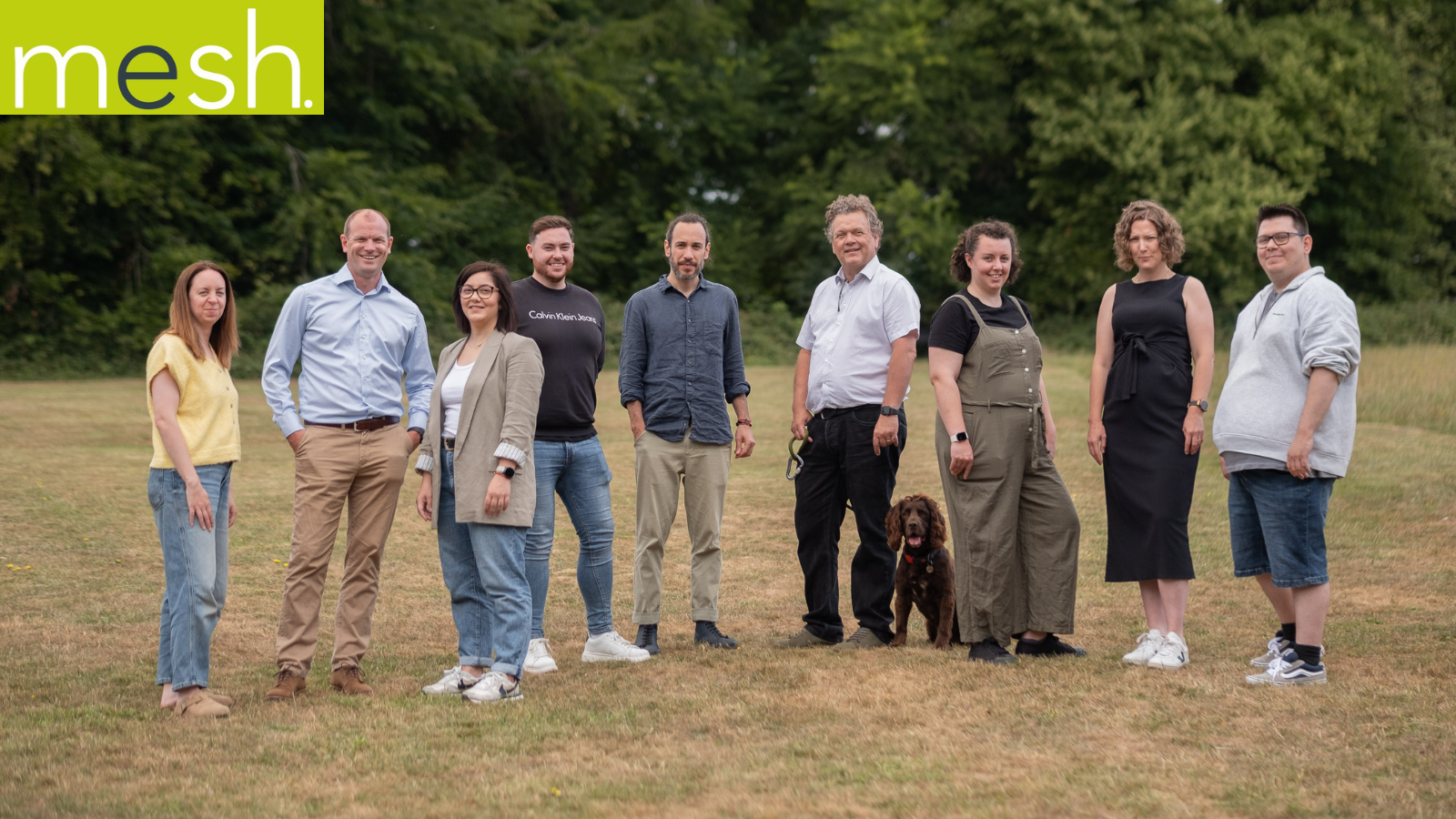
Group of nine people and a dog standing in a grassy field in front of trees.
by Doug Johnson 1 October 2025
The Mesh Way – Our values in action
Modern brick building with black window frames, adjacent to a smaller building on a clear day.
by Doug Johnson 23 September 2025
Why is Building Regulations Part O compliance tougher to achieve in London?

Subsribe to memo from mesh