

How do heat pumps work? Mesh Energy explains

Doug Johnson
How do heat pumps work? Mesh Energy explains

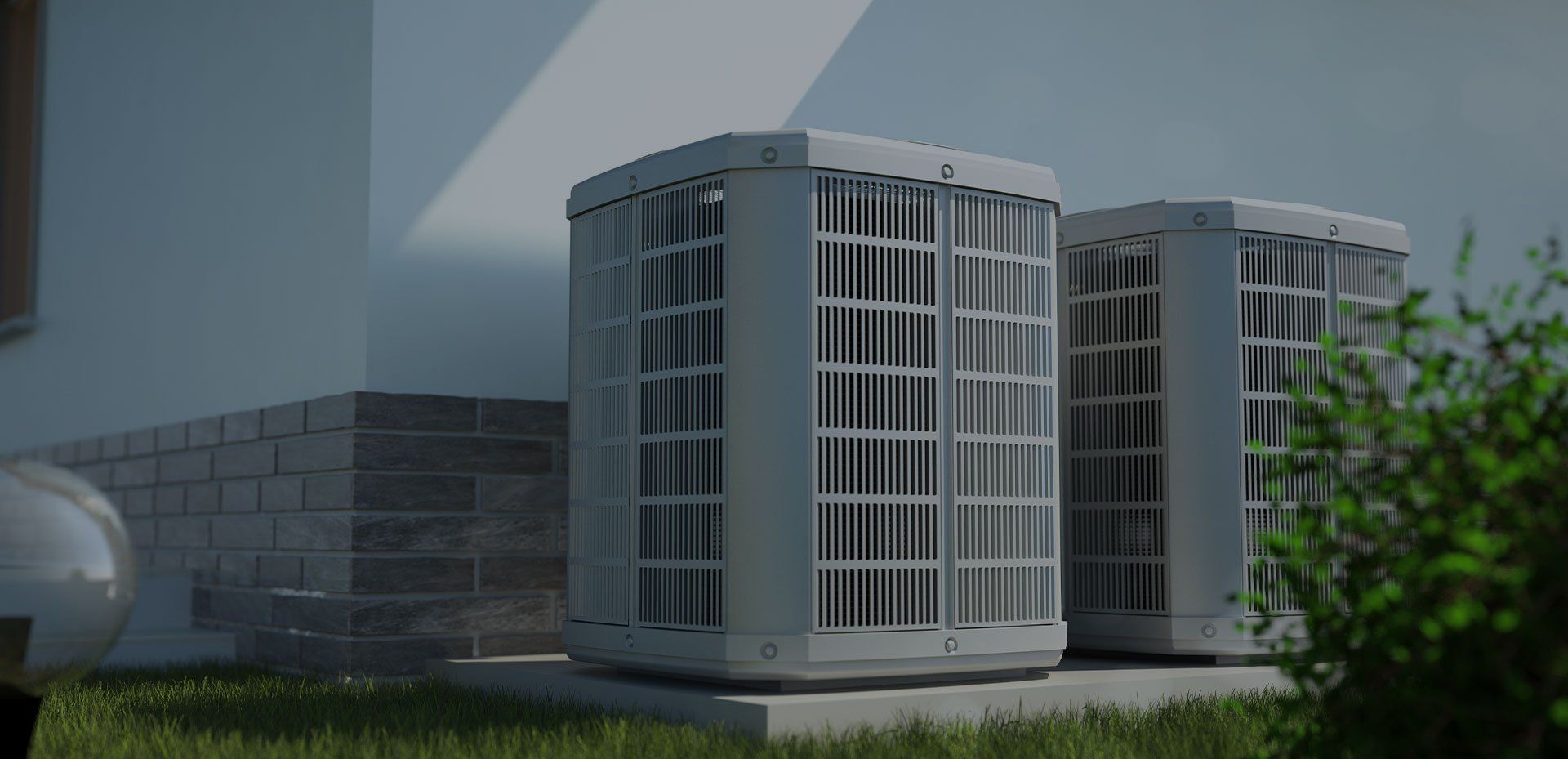
In the first of our Mesh Energy Explains series of blog posts, we’re looking at just how heat pumps work; specifically, how energy is harvested and transported into the home using little more than an electrical supply. Those of us working in the renewable technology sector often forget that sometimes we need to return to basics and explain some of the fundamentals to those just entering into the field or researching for their personal provision. So, here goes…


A brief history of heat pumps and the basics

In the 19th Century, William Thompson, otherwise known as Lord Kelvin (of temperature scale fame), pioneered the concept of the heat pump using a refrigerant cycle to prove that heat energy could be used to cool. In fact, he foresaw use in air conditioning and refrigeration.


In the 1940s, Robert C. Webber is credited with creating the first modern day heat pump and we haven’t looked back since. Today’s heat pumps work in exactly the same way; with developments in efficient compressor technology and refrigerant gases incrementally improving operational efficiency of the units.


Heat pumps are often described as “fridges working in reverse”. Energy in fridges is extracted from the enclosed interior of the fridge, keeping your food cool and using a tiny amount of electrical energy to power a small compressor. This extracted heat is “processed” and ultimately expelled at the back of the fridge via an element.


A heat pump uses an identical principle and strips low-grade energy from the natural environment using the process of gas evaporation. Once compressed by the compressor cycle, it is during its condensation phase that high temperature energy is exchanged into your under floor, radiator or domestic hot water system.


The diagram below shows the basic cycle.

Diagram of a vapor-compression cycle with blue evaporator, red condenser, compressor, and expansion valve

As a general rule, heat pumps as we know them today use three distinct mediums to harvest energy: earth/ground, air and water. Being pedantic, it is the water moisture in all of these mediums that helps with energy transfer, but for clarity we will stick with these three.


So, it is the changing heat source that helps the evaporation phase of the refrigerant cycle that gives heat pumps their name.


Ground source heat pumps

Ground source heat pumps (also known as geothermal heat pumps) use two practical methods for harvesting energy.


The first method is horizontally buried pipework in the ground which has a glycol/water mixture pumped around it to stop it freezing. The pipes are buried at approximately 1.5m below the ground level and the ambient heat of the earth (nominally 8ºC-12ºC) provides energy to the liquid flowing through the buried pipes. The fluid, which warms up just a few degrees in its journey in the ground, heads back to the heat pump. The water that heads back to the heat pump from the ground collector is often only around 5ºC but this small temperature is passed through a plate heat exchanger and with a significant flow rate, boil the gases in the ground source heat pump refrigerant circuit and impart large quantities of thermal energy to the home using an electric compressor.


Alternatively, the second method uses vertical boreholes (circa 100m) which can be drilled and which require significantly less ground area. These still rely on the ground’s low level thermal energy to warm the fluid but, because of the depth, much more stable ground temperatures are found, and the efficiency of the system improves.


Typical ground source heat pump efficiencies year-round are around 400%.


Air source heat pumps

Air source heat pumps use an external fan unit to draw air across the evaporator unit, which exits at the back of the unit cooler than it entered. Because of varying seasonal air temperatures, these heat pumps are less efficient than their ground source cousins. As a rule, the colder the outdoor air gets, the harder the system has to work to strip energy from the air and elevate it to heat the home.


Air is sucked into air source fan units using a single fan (or fans) and refrigerant pipes strip heat from the air. The air exits the fan units at a cooler temperature. You may be surprised to hear that air source heat pumps can successfully extract energy from the air down to well below -20ºC. Because the refrigerant in the heat pump boils at such a low temperature, even air well below freezing temperatures can give up its heat.


Due to energy in the air affecting outputs from air source units, the efficiencies of these systems typically vary from 450% efficient in the summer and 250% efficient in the winter months. This means that even in the winter one unit of electricity can supply 2.5 units of heat to the home using ‘freezing’ cold air and some clever physics!

3D diagram of an object orbiting a platform with red, blue, and gray curved arrows

Water source heat pumps

Water source heat pumps are so called as they are used in lakes, ponds and streams to harvest energy.


“Open loop” and “closed loop” systems are used. Open loop systems can be likened to a hoover sucking up water and using this direct energy to transfer to the evaporator via a plate heat exchanger. The closed loop system is basically a ground source system with loops or panels buried or pinned under water to harvest energy from the body of water. There are many advantages regarding the amount of energy that can be harvested from pure bodies of water, especially streams and rivers, as flow rates are high and ensure an almost endless supply of energy to the heat pump.


Due to the high levels of energy in the water, water source heat pump efficiencies can exceed 500%.


Still have questions? Speak to us!

So, there you go. A whirlwind introduction to the magical, yet practical basics behind the increasingly common heat pump!


If you still have any questions about the wondrous world of heat pumps and the part they could play in your low-energy home, please don't hesitate to get in touch with the Mesh team today.

SHARE THIS POST WITH YOUR NETWORK

Building performance specialist Mesh explains the Net Zero Carbon Building Standard
1 July 2026
In this article, we examine the new UK Net Zero Carbon Buildings Standard, why it was was developed and potential issues around implementation.
Affordable and social housing where overheating is an increasing risk
30 June 2026
Overheating in affordable housing is a growing issue caused by climate change. We can assist with sustainable strategies for new homes and retrofit programmes.
22 June 2026
Mesh Founding Director Doug Johnson has been invited to join the judging panel for this year’s Building Innovation Awards. These awards are a fantastic opportunity to showcase the incredible industry pioneers, innovations and technical advancements in UK construction. Together with a panel of influential clients and Tier 1 decision makers from across the construction sector, he will be evaluating the entries ahead of the awards celebration in Birmingham on 29th September 2026. The Building Innovation Awards the only awards scheme in the built environment sector to be recognised with the prestigious Outstanding Awards Trust Mark from the Independent Awards Standards Council (IASC). Doug Johnson: "It is an immense privilege to join such as esteemed panel of clients and industry professionals. We have so much to be proud of in the built environment and these awards are a brilliant opportunity to celebrate innovation which keeps our sector advancing, particularly in the areas of sustainable development and construction as we work towards net zero and the vital need to accelerate decarbonisation. Innovation is absolutely central to that." More details about the awards here .
15 June 2026
Building performance specialist Mesh has completed a building services design project for a new flagship art gallery in Savile Row – Sadie Coles HQ. The six-storey Grade II listed Georgian townhouse in London’s Mayfair, which dates back to the 1730s, has been fully restored and transformed by lead contractor Work Ltd, to create a unique space for contemporary art. The building, once home to the Burlington Fine Arts Club in the 19th century, had been bomb damaged in World War II and used as offices post-war. It has now been sensitively reinstated as a space for artists to exhibit their work in a part of London which has a long association with contemporary art. The key aim of this extensive refurbishment project was to work to a fast-track programme for the gallery’s opening to coincide with the Frieze Art Fair. Mesh was appointed to develop a holistic MEP building services strategy, from concept through to detailed design, and in keeping with the character and constraints of this heritage building. Enhanced control of the internal environment was required to maintain visitor comfort all year round and in the context of continually fluctuating occupancy levels, including events for up to 200 people. Working within a Grade II listed building required a highly considered approach at every stage – historic architectural features were revealed and restored internally and externally, and extensive structural improvements were required to accommodate art loadings. These factors had to be reflected in the services design and specification. Mesh used dynamic thermal modelling for different scenarios of use to understand the heating and cooling loads required and to allow the services to be accurately sized for each room or gallery. Two priorities were cooling and for each area to be individually controlled according to occupancy levels. Discrete but robust heating and cooling provision was designed for the gallery areas and the MEP services were concealed in void spaces to avoid impacting on the architectural features of the building or the layout of the galleries. Plant and equipment had to be sited in compliance with stringent planning requirements, which limited the number, size, position and visual impact of the external units. Passive measures were introduced to reduce energy consumption and included actuated openable rooflights in a glazed lantern to purge warm air during the day and reduce the reliance on the active cooling system. Giles Reid, Giles Reid Architects: “The new gallery has succeeded in its ambition – to reaffirm that London has an important position in the global art world. This was a complex project which had to be delivered in just nine months from planning approval for the fixed deadline for opening, and despite having to carry out extensive structural alterations. The building is performing well from a services perspective, including at the opening event which was attended by around 800 guests. The M&E design in contemporary art spaces like this must never detract, visually or acoustically, from the art being exhibited and this has been successfully achieved. This is a fantastic statement building which has been acclaimed and the Client is thrilled. It is a credit to everyone involved that this historic building has been brought back into use for contemporary art.” Doug Johnson, Founding Director of Mesh: “This project demonstrates exactly what intelligent building services engineering should deliver – an integrated, high-performance solution to deliver year-round-comfort for visitors and users of the building whilst maintaining a clean aesthetic. Working within a Grade II listed building with complex planning restrictions required genuinely creative engineering rather than a conventional response. We are really proud to have contributed to this outstanding building transformation.” The Project Team: Client: Sadie Coles HQ Lead contractor (design and delivery): Work Ltd Architectural partner: Giles Reid Architects MEP design / building performance: Mesh About Mesh Mesh offers a range of design and engineering services to help organisations in the public and private sectors to improve the energy efficiency of new and existing buildings, housing and estates. This includes support for architects; planning; thermal modelling and overheating analyses; carbon reduction strategies; feasibility studies for renewable technologies; MEP design, and regulatory compliance. Architectural images - Joseph Asghar
Building performance specialists Mesh names in the Sunday Times Best Places to Work List 2026
1 June 2026
Building performance specialists Mesh names in the Sunday Times Best Places to Work List 2026
Four people posing at an awards event, one holding a framed certificate, in front of a logo backdrop
20 May 2026
Mesh Energy wins Energy Efficiency Consultancy of the Year for innovative low-carbon solutions. Contact us for expert energy strategies.
Indoor botanical garden with arched glass roof and elevated walkways over lush greenery
by Doug Johnson 1 May 2026
Explore battery storage tech for sustainable building design. Improve energy efficiency & manage costs effectively. Contact us today!
Scattered wooden letter tiles spelling words on a tabletop, with several tiles stacked and overlapping.
by Rhiannon James 1 May 2026
Understand renewable energy acronyms for sustainable design. Contact us for feasibility studies to enhance your project.
Interview title slide: “Delivering Success for Paragraph 84” with portrait of Rob Hughes on dark background
7 April 2026
Rob Hughes discusses navigating Paragraph 84 for rural planning success. Contact us for expert advice on sustainable building design.
Bright wooden restaurant interior with tables, chairs, plants, and large windows letting in natural light
9 March 2026
Mesh enhances energy efficiency & sustainability at Westonbirt Arboretum. Contact us to learn about our eco-friendly solutions.

Subsribe to memo from mesh